- Email: roswellchildcareacademy@gmail.com
- Phone: 470-282-1521
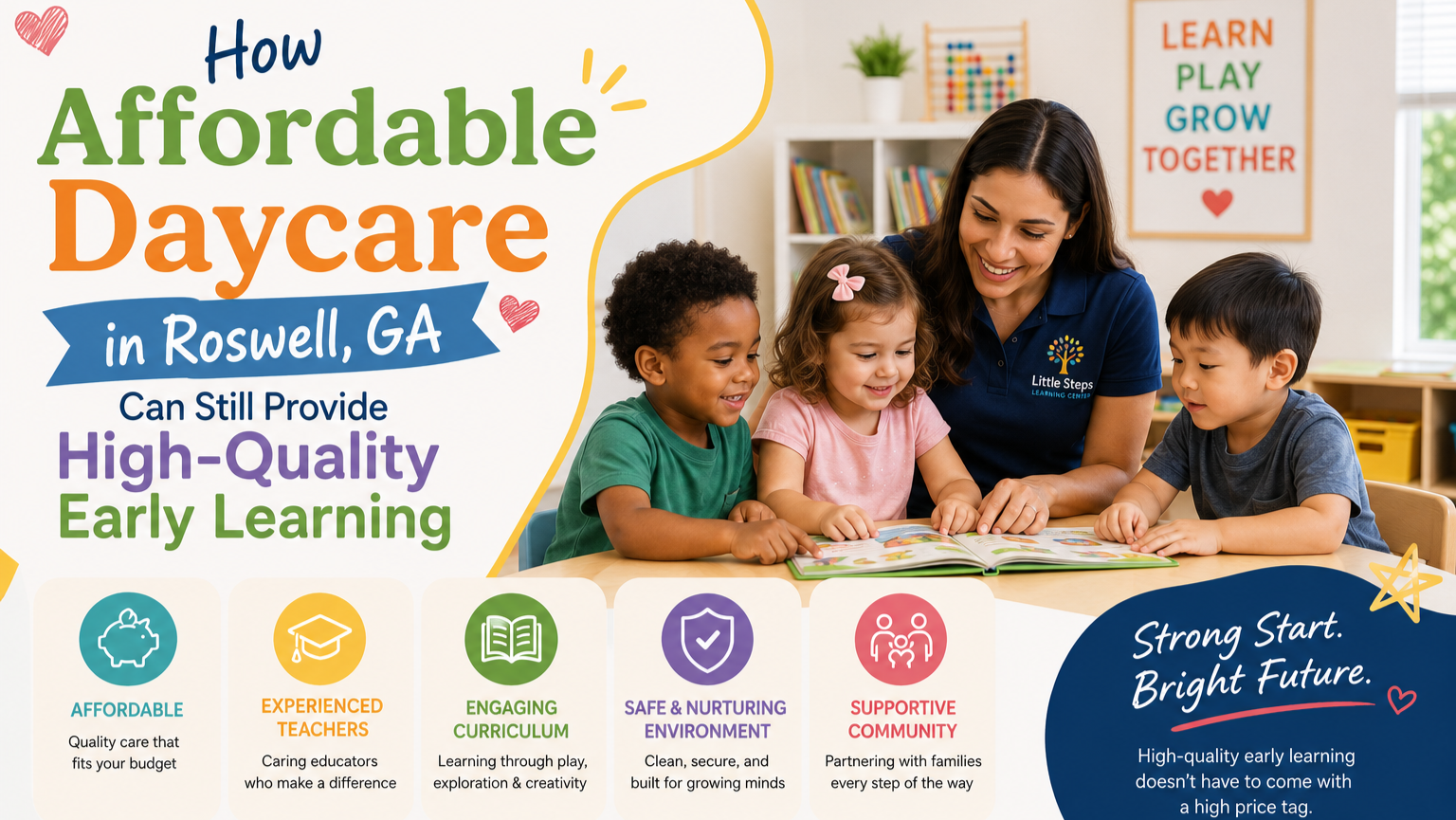
Finding affordable daycare in Roswell GA is one of the most important decisions a parent can make, and it often comes with a common worry: does a lower price mean lower quality? Many families assume that affordable care cannot offer the same learning, safety, and attention as expensive programs. The truth is very different. A well-run daycare can be both budget-friendly and high in quality, giving your child a strong start without putting pressure on your family budget.
The early years of a child’s life shape how they learn, think, and connect with others. Parents today understand this more than ever. They want a place where their child feels safe, stays active, and grows in real ways every day. This article explains how affordable daycare can still deliver excellent early learning, and what parents should look for when choosing the right program.
Childcare costs have risen steadily, and many families feel caught between price and quality. At the same time, research continues to show that the first five years of life are critical for brain development. Parents do not want to choose between saving money and giving their child a good start.
The good news is that they often do not have to. Many affordable programs focus their budget on what truly matters: caring teachers, simple learning routines, and a safe environment. Understanding this helps parents make confident, informed choices instead of decisions based only on price.
Before comparing programs, it helps to understand what quality early learning actually looks like. It is not about fancy buildings or expensive toys. It is about how children spend their day and how well they are supported.
A strong early learning program usually includes:
These features do not depend on a high price tag. They depend on good leadership, caring staff, and a clear focus on child growth.
Some costly programs spend heavily on marketing, design, or extra services that do not directly help a child learn. Meanwhile, an affordable program may put its energy into smaller class sizes, experienced teachers, and a steady daily routine. For a young child, those things matter far more than a polished lobby.
Early childhood development is the heart of any good daycare. During these years, children build the skills they will use for the rest of their lives. A quality program supports this growth in simple, everyday ways.
A well-rounded program helps children grow in several key areas:
What matters most is consistency. Children learn best when these activities happen every day in a calm, caring setting. Affordable programs can absolutely provide this when they stay focused on the child.
One of the biggest reasons parents choose daycare is to prepare their child for school. School readiness does not mean a child must read or write early. It means a child feels confident, curious, and ready to learn in a group setting.
Structured learning gives children a gentle, predictable rhythm to their day. This helps them feel secure and ready to focus. A good toddler program often includes:
When children experience this kind of structure early, they adjust to school more smoothly. They already know how to follow routines, listen to a teacher, and work alongside other children. Many parents searching for toddler daycare in Roswell are really looking for this exact balance of care and gentle learning.
Play is not the opposite of learning for young children, it is how learning happens. When a child stacks blocks, they explore balance and math. When they pretend to cook, they practice language and social skills. A quality daycare uses play as a teaching tool, not just free time.
Academic skills are important, but emotional and social growth are just as vital in the early years. A child who feels safe and valued will learn more easily and enjoy the experience.
Young children are still learning to understand and manage their feelings. A caring daycare supports this by:
When children feel emotionally secure, they are more open to learning and exploring.
Daycare is often a child’s first real experience in a group. This is where they learn to:
These social skills carry into school and everyday life. Quality childcare in Roswell focuses on these moments because they shape how a child connects with the world around them.
No matter the price, safety must always come first. A good learning environment is one where children feel protected and free to explore.
Parents should expect clear safety standards, including:
A safe environment is not a luxury feature. It is a basic requirement, and affordable programs can and should meet these standards fully.
Beyond safety, the environment should feel warm and welcoming. Bright, organized rooms, simple learning corners, and friendly faces help children feel at home. A comfortable child is a confident learner. This kind of environment does not depend on a large budget — it depends on care and good organization.
So how do affordable programs manage to offer real quality? The answer lies in smart priorities.
Affordable, high-quality daycares often succeed because they:
These choices show that quality is about focus, not just funding. A program that truly cares about children will direct its energy where it matters most.
Choosing a daycare is a personal and important decision. Price matters, but it should not be the only factor. Parents should look at the full picture.
When visiting a daycare, it helps to ask:
A short visit can tell parents a lot. Watch how teachers speak to children. Notice if the children seem happy and engaged. Look at how clean and organized the space is. These simple observations often reveal more than any price list.
Good early care is an investment in a child’s future. Children who attend quality programs often enter school with stronger language, better social skills, and more confidence. These early advantages can support their learning for years to come.
This is why affordable daycare matters so much. It allows more families to give their children a strong, healthy start without financial stress. Quality early learning should be within reach for every family, not just a few.
Choosing the right program for your child does not mean spending the most money. As this article has shown, affordable daycare in Roswell GA can still provide safe, structured, and high-quality early learning. What truly matters is a caring environment, trained teachers, a steady daily routine, and a strong focus on each child’s growth.
The early years shape how children think, feel, and connect with others. A good program supports cognitive, emotional, and social development while preparing your child for school in a gentle, natural way. Whether you are exploring toddler daycare in Roswell for your little one or comparing options for childcare in Roswell, the goal is the same: a place where your child feels safe, happy, and ready to learn.
At Roswell Childcare Academy, we believe every child deserves a strong start, no matter the family budget. We are committed to combining affordability with real quality, so your child can grow with confidence. Contact Roswell Childcare Academy today to schedule a visit and see how our caring, structured program can support your child’s early learning journey.
Yes, it often can. Quality depends on caring teachers, safety, and a steady learning routine — not on a high price. Many affordable programs focus their budget on the things that truly help children grow, so families get real value without overspending.
Every family is different, but many children begin daycare between one and three years of age. The right time depends on your child’s needs and your family’s situation. A good program will help your child adjust slowly and feel comfortable from the start.
Daycare builds school readiness through daily routines, group activities, and gentle structured learning. Children practice listening, sharing, and following directions. This helps them feel confident and ready when they move on to a classroom setting.
Watch how teachers interact with children and notice if the children seem happy and engaged. Check that the space is clean, safe, and well-organized. Ask about daily routines, safety procedures, and how the staff communicates with parents.
A quality daycare offers comfort, encouragement, and a calm, predictable environment. Teachers help children understand their feelings and build confidence through small daily successes. This emotional support helps children feel secure and ready to learn.
Yes. Daycare is often a child’s first group experience, where they learn to share, take turns, and make friends. With gentle guidance, children also learn to solve small conflicts and communicate their needs, which helps them in school and beyond.
Look for secure entry points, clean play areas, age-appropriate toys, and trained, attentive staff. Ask about health and emergency procedures. A safe daycare follows clear standards, and affordable programs can meet these requirements fully.

Comments are closed