- Email: roswellchildcareacademy@gmail.com
- Phone: 470-282-1521
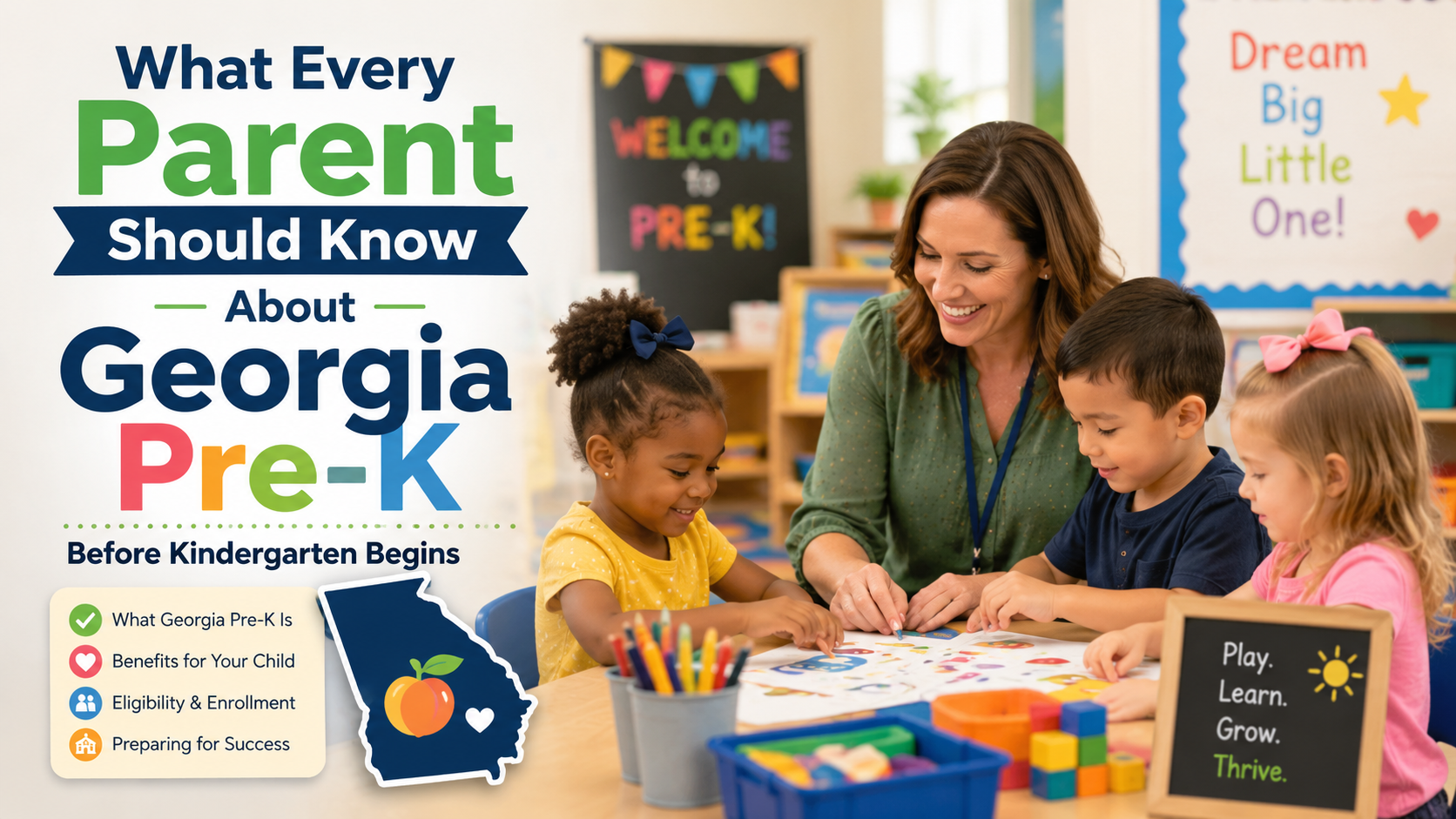
If you live in Georgia, that question usually leads straight to one place. Georgia Pre-K is the state’s free program for four-year-olds, and for many families it’s the first real step toward kindergarten. But knowing the program exists and actually understanding how it works are two very different things. Plenty of parents only learn the details after a deadline has already passed.
That’s the part that catches people off guard. Georgia Pre-K isn’t automatic. You don’t get a letter in the mail telling you your child has a seat. Spots are limited, the application windows are short, and the most popular programs fill fast. A little planning makes a huge difference.
This guide walks you through what really matters before kindergarten begins. We’ll cover how the program works, the mistakes families make every year, how Pre-K shapes your child’s growth, and what to look for when you’re comparing options. If you’re a parent weighing a daycare in Roswell or trying to figure out your next move, you’ll leave with a clearer head and a plan you can actually use.
Let’s start with the basics, because there’s a lot of confusion here.
Georgia Pre-K is funded through the Georgia Lottery for Education and run by the Department of Early Care and Learning, often called DECAL or “Bright from the Start.” The program is completely free to families. There’s no tuition, no income requirement, and no hidden cost to attend. That alone makes it one of the most valuable early education programs in the country.
Here’s how the schedule shapes up. Your child gets a 6.5-hour instructional day, five days a week, for 180 days across the school year. That adds up to roughly 1,170 hours of structured learning before kindergarten even starts. For a four-year-old, that’s a serious head start.
The one rule that trips families up most is the age cutoff. Your child must turn four on or before September 1 of the school year they want to attend. Not September 2. Not “close enough.” If their birthday lands after that date, they wait until the following year. It feels strict, but it keeps classrooms grouped by developmental stage, which actually helps your child.
A few other things worth knowing:
Most parents I talk to are surprised by how structured it is. This isn’t glorified babysitting. It’s a real curriculum built by early education experts, delivered by trained teachers, aimed squarely at getting your child ready for the jump to kindergarten.
If there’s one section to read twice, it’s this one. These slip-ups are common, they’re avoidable, and they cost families seats.
This is the big one. Many parents assume they can sign up whenever they get around to it. They can’t. Each provider sets its own application window, and a lot of them open in late January and close in early February. Popular programs often use a lottery, and once that drawing happens, your name goes on a waitlist if you missed it.
The fix is simple. Start looking the fall before you want your child to attend. Mark the application dates on your calendar the moment you find them, and treat them like a doctor’s appointment you can’t reschedule.
I understand the instinct. You found a place you love, so why bother with backups? Because the lottery doesn’t care how much you love it. If that one program fills up, you’re left scrambling.
Smart families apply to two or three options. You can rank them in your own mind, but having more than one application in the pool dramatically raises your odds of landing a seat somewhere good.
Georgia Pre-K requires proof of your child’s age and your Georgia residency. You’ll also need a completed health form, often called Form 3300, covering hearing, vision, dental, and nutrition checks. That form has to be on file within 90 days of your child starting.
Parents lose seats over missing documents all the time. Get your child’s birth certificate, a current utility bill or lease, and that health screening sorted early. Nothing stings like being accepted and then losing the spot over a form you forgot.
It’s easy to think of Pre-K as “the year before the real schooling starts.” But the growth that happens in this window is some of the most important your child will ever go through. Here’s where it shows up.
Notice how much of this has nothing to do with academics. A child who can handle frustration, follow a routine, and ask for help is often more “ready” than one who can count to 100 but falls apart when things don’t go their way. Good Pre-K builds the whole child, not just the report card.
Early education has shifted in recent years, and parents’ expectations have shifted with it. If you remember Pre-K as worksheets and nap mats, the modern version may surprise you.
Today’s best programs lean into play-based learning, where kids absorb skills through hands-on activities instead of drills. A child learning to measure water at a sensory table is building math and science instincts without even realizing it. Teachers guide that play with intention, tying it back to real developmental goals.
There’s also a bigger focus on social-emotional learning. Programs now openly teach kids how to name their feelings, calm themselves down, and resolve small conflicts. After the disruptions of recent years, families care more than ever about emotional growth, not just letters and numbers.
Parents in 2026 also expect real communication. They want updates on their child’s day, photos of activities, and a teacher who’ll tell them honestly how things are going. The days of dropping your kid off and hearing nothing until pickup are fading. Strong programs treat parents as partners, because consistency between home and school is what makes early learning stick.
Technology has found a careful place too. The best programs use it sparingly and with purpose. A short interactive story or a teacher snapping photos to share with parents is fine. Screens used as a babysitter are not. Experienced educators in 2026 know that a four-year-old learns far more from a conversation, a puzzle, or a trip to the playground than from a tablet. If a program leans heavily on screens, that’s a fair thing to ask about.
The thread running through all of it is balance. Modern childcare blends structured learning with free play, academic basics with emotional growth, and routine with flexibility. That mix is what gives kids both the skills and the confidence to thrive. When you tour a program, look for that balance in action. A classroom where some kids are building, some are reading with a teacher, and others are working on a project together usually means the adults in the room understand how young children really learn.
Many families weigh state-funded Georgia Pre-K against a private preschool or daycare program. Both can be excellent. They just serve slightly different needs. Here’s a clear comparison.
| Feature | Georgia Pre-K | Private Preschool / Daycare |
|---|---|---|
| Cost | Free to families | Tuition-based, varies widely |
| Age requirement | Must turn 4 by September 1 | Often flexible, accepts younger ages |
| Schedule | 6.5 hours, 5 days, 180 days | Often full-day, year-round options |
| Availability | Limited seats, often a lottery | Usually open enrollment |
| Curriculum | State GELDS standards | Set by the individual program |
| Class size | Capped at 20 students | Varies by provider |
| Wraparound care | Limited; ends mid-afternoon | Before- and after-care common |
The honest takeaway? Cost and curriculum quality make Georgia Pre-K hard to beat. But the shorter day can be tough for working parents. That’s why many families pair the two, choosing a private childcare center that offers a Georgia Pre-K classroom along with extended hours. You get the funded program and the full-day coverage you need.
There’s no single “right” choice here. The best program is the one that fits your child and your life. A few practical tips to guide you:
Visit in person. Photos online tell you almost nothing. Walk through the classrooms, watch how teachers talk to kids, and notice whether the children seem happy and engaged. Your gut will tell you a lot.
Ask about the daily routine. Routine and consistency matter enormously for young kids. A good program can walk you through exactly what a typical day looks like, from arrival to pickup.
Think about logistics honestly. A wonderful program that’s a 40-minute drive in the wrong direction will wear you down by October. Factor in your commute, your work hours, and your backup plans.
Trust the staff vibe. You’ll be handing your child to these people every morning. If the teachers seem warm, patient, and genuinely interested in your kid, that’s worth a great deal.
Plan your timeline backward. Figure out when your child needs to start, then work back to the application window. Give yourself a cushion for paperwork and surprises.
Roswell sits in north Fulton County, and it’s a great place to raise young kids. Families here tend to care deeply about education, and that shows up in the range of early learning options available. Between Fulton County Schools and a strong mix of private centers, parents looking for childcare in Roswell have real choices to weigh.
Many local families want the best of both worlds: the academic foundation of Georgia Pre-K with the full-day flexibility their schedules demand. That’s exactly why so many turn to a quality daycare in Roswell that offers a structured Pre-K classroom alongside extended care, nutritious meals, and a warm, safe environment.
A program like Roswell Child Care Academy reflects what local parents prioritize most. Families here aren’t just looking for supervision. They want a place that nurtures curiosity, builds social skills, supports emotional growth, and treats child safety as non-negotiable. When a center pairs those values with the Georgia Pre-K curriculum, children get a smooth, confident path toward kindergarten. The goal isn’t to push kids ahead. It’s to help them feel secure, capable, and excited about learning, right in their own community.
When you’re touring programs, keep this short checklist in your back pocket. These are the things that separate a good center from a forgettable one.
If a program checks all five boxes, you’re in good shape. If something feels off during a visit, listen to that feeling.
Choosing the right path before kindergarten can feel heavy, but it doesn’t have to be. Georgia Pre-K gives your child a free, high-quality foundation built around real learning, social skills, and the kind of routine that makes the leap to kindergarten so much smoother. Understanding how it works, applying early, and keeping your paperwork in order puts you miles ahead of families who wait too long.
Remember the big picture. This year is about more than letters and numbers. It’s where your child learns to handle feelings, make friends, follow a routine, and believe in their own ability to try new things. Those are the skills that carry them through their school years and beyond. A strong early education program supports cognitive growth, emotional development, communication, and school readiness all at once.
For families weighing childcare in Roswell, the encouraging news is that you have excellent options close to home. Whether you choose state-funded Georgia Pre-K, a private program, or a center that blends both, what matters most is finding a place that feels safe, warm, and genuinely focused on your child. A trusted daycare in Roswell like Roswell Child Care Academy can offer that blend of structured learning and full-day care that busy families need.
So take the next step today. Visit a few programs, ask plenty of questions, and trust what you see and feel. Your child only gets one shot at these early years, and the right start makes all the difference. Your little one is ready to grow. Now it’s your turn to give them the foundation they deserve.
Yes, completely. Georgia Pre-K is funded through the Georgia Lottery for Education, so there’s no tuition for families. Your child gets a full 6.5-hour instructional day, five days a week, at no cost. You may still pay separately for extended care if you need before- or after-school hours, but the core Pre-K program itself doesn’t charge families anything. It’s one of the most valuable free education benefits in the state.
Your child must turn four years old on or before September 1 of the school year they plan to attend. The cutoff is firm. If their birthday falls even one day after September 1, they’ll need to wait until the following year. This rule keeps classrooms grouped by developmental stage, which helps every child learn at a pace that fits them. Always double-check your child’s eligibility before applying.
Start researching programs the fall before you want your child to attend. Many providers open applications in late January and close them in early February, with lottery drawings happening in March. Deadlines are short and seats fill fast. The biggest mistake parents make is waiting too long. Mark the dates as soon as you find them, and apply the moment the window opens to protect your spot.
Georgia Pre-K is a free, state-funded educational program with a set curriculum and a 6.5-hour day. Daycare is typically a paid program with flexible, often full-day hours and its own approach to activities. Many childcare centers actually offer both, hosting a Georgia Pre-K classroom while providing extended care around it. That combination gives working parents the funded curriculum plus the full-day coverage their schedules require.
No. Georgia Pre-K is completely voluntary. No family is required to participate, and you can choose private preschool, home-based care, or another path instead. That said, most early childhood experts agree that quality Pre-K offers real benefits for school readiness, social skills, and emotional growth. The choice is yours, but the structured learning and routine can give children a meaningful head start before kindergarten.
You’ll need proof of your child’s age, such as a birth certificate or passport, and proof of Georgia residency, like a lease or utility bill. You’ll also complete a health form, often called Form 3300, covering hearing, vision, dental, and nutrition screenings, which must be on file within 90 days of starting. Gather these early. Missing paperwork is a common reason families lose an accepted seat.
Yes, in more ways than parents expect. Beyond early reading and math, Pre-K builds the social and emotional skills that kindergarten demands, like following routines, managing feelings, sharing, and separating calmly from a parent. Children who attend often walk into kindergarten more confident and comfortable in a school setting. That smoother transition can shape how they feel about school for years to come.
Visit programs in person and watch how teachers interact with the children. Look for safety, clean and organized classrooms, qualified staff, clear communication, and kids who seem genuinely engaged. Ask about the daily routine and how they handle child development. Consider your commute and work hours too. The best childcare in Roswell is the one where your child feels safe and happy and where you feel confident every morning at drop-off.


Comments are closed