- Email: roswellchildcareacademy@gmail.com
- Phone: 470-282-1521
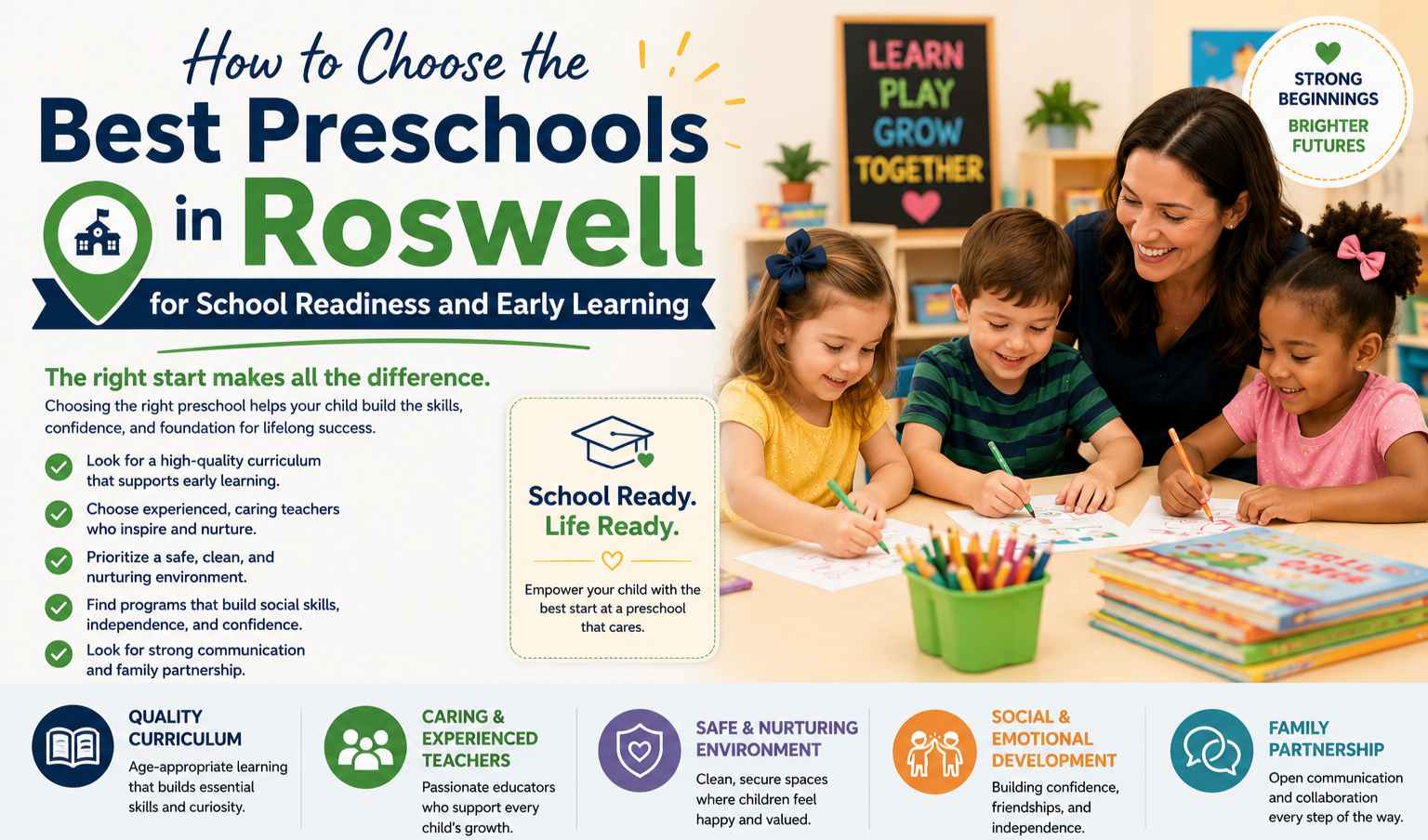
To choose the best preschools in Roswell, look for safe, nurturing classrooms, qualified teachers, low child-to-staff ratios, and a balance of play and structured learning. Visit in person, ask about daily routines, and pick a program that supports your child’s social, emotional, and academic growth before kindergarten.
Finding the right preschool can feel overwhelming. One day your little one is a baby, and the next you’re touring classrooms, asking about nap schedules, and wondering if you’re making the right call. If you’ve been searching for preschools in Roswell, you already know how fast the choices start to blur. Every place has bright walls, cheerful staff, and a website that promises the world.
So how do you tell the difference between a program that simply keeps kids busy and one that actually prepares them for school?
That question keeps a lot of parents up at night, and it’s a fair one. These early years shape so much how a child talks, plays, handles big feelings, and walks into a kindergarten classroom feeling ready instead of scared.
This guide is here to make that decision easier. We’ll walk through what really matters, the mistakes that trip up even careful parents, and the small signs that tell you a preschool is the real deal. No confusing jargon. No pressure tactics. Just honest, practical help.
Because choosing care for your child isn’t only about price or location. It’s about trust. By the time you finish reading, you’ll know exactly what to look for and which questions to ask.
Most preschools look pretty similar from the parking lot. The real differences show up in the small, everyday details.
A strong program does more than watch your child. It builds a daily routine that helps kids feel safe and confident. Children thrive on knowing what comes next. When a classroom has a steady rhythm — arrival, circle time, play, snack, rest — kids relax. And relaxed kids learn better.
Early education specialists often point to one thing above all: warm, responsive teachers. A degree matters, but so does the way a teacher kneels down to a child’s level and listens. You can sense it during a visit. Watch how the staff speak to the children. Are they patient? Do they notice the quiet kid in the corner? That tells you more than any brochure ever could.
Here’s what experienced parents tend to value most:
Childcare in Roswell comes in many shapes, from large centers to smaller home-style programs. There’s no single “best” type. The best fit is the one that matches your child’s personality and your family’s needs.
Even the most loving, careful parents slip into a few common traps. Knowing them ahead of time can save you a lot of second-guessing.
It’s tempting to pick the cheapest daycare in Roswell, especially with how expensive childcare has become. But the lowest price can sometimes mean fewer staff, higher turnover, or a weaker learning program. On the flip side, the most expensive option isn’t automatically the best. Look at the value, not just the number. What does your child actually get for the cost?
A website can be polished and still hide a lot. You learn the truth by walking in. Is the room loud and chaotic, or calm and busy in a good way? Do the kids look engaged? Does it smell clean? Trust your gut here. A short visit, ideally during regular class hours, reveals things no phone call can. Bring your child along and watch how they react to the space.
Some children are bold and love a big, bustling room. Others get overwhelmed and do better in a quieter, smaller group. Many parents pick a program because a friend loved it, then wonder why their own child struggles. Your child is one of a kind. The right preschool should feel right for them, not just for the neighbor’s kid down the street.
The fix for all three mistakes is simple: slow down, visit, and ask questions. You’re not being picky. You’re being a good parent.
A quality preschool does far more than babysit. It quietly builds the skills your child will lean on for years. Here’s how the right environment supports each area of development:
The beautiful part is that good preschools weave all of this into play. To a child, it just feels like fun. But underneath the blocks and finger paint, real learning milestones are being reached every single day.
Early education keeps evolving, and parents in 2026 expect more than they used to. Here’s where modern childcare is heading.
Play with a purpose. The best programs no longer treat play and learning as separate things. Structured learning now happens through guided play, where teachers gently steer activities toward specific skills. Kids build a tower and learn balance, counting, and teamwork all at once.
Social and emotional learning front and center. After the disruptions of recent years, parents and educators alike care deeply about emotional growth. More preschools now teach kids how to manage feelings and get along with others, not just their ABCs.
Stronger family communication. Today’s parents want to feel connected to their child’s day. Many programs now send daily photo updates, quick notes, or app messages so you know what your little one did before you even ask.
A focus on the whole child. Experts recommend looking for balance movement, art, music, outdoor time, rest, and quiet focus. A program that does it all helps children grow in every direction.
If a preschool you’re considering checks these boxes, you’re likely looking at a thoughtful, up-to-date program.
It helps to see the differences side by side. Here’s a simple comparison of common early education choices, so you can weigh what fits your family best.
| Feature | Center-Based Preschool | Home-Based Daycare |
|---|---|---|
| Group size | Larger, grouped by age | Smaller, often mixed ages |
| Structure | Set daily curriculum and routine | More flexible, family-style |
| Staff | Multiple trained teachers | One or two caregivers |
| Learning focus | Strong school-readiness programs | Nurturing, home-like care |
| Social exposure | Many peers, group activities | Fewer kids, closer bonds |
| Best for | Kids ready for structure and school prep | Kids who thrive in a cozy setting |
| Hours | Usually fixed, full schedules | Often more flexible |
Neither option is “better” across the board. A center-based program tends to shine for school readiness and structured learning, while a home-based setting can feel gentler for a younger or more sensitive child. Think about what your child needs right now, and remember their needs may shift as they grow.
Once you’ve narrowed your list, a few practical steps make the final choice clearer.
Start by visiting your top two or three options in person. Go during normal class hours, not just an empty open house. Watch the children, not only the rooms.
Then ask direct questions. A good program will answer happily. Try these:
Next, picture your daily life. Does the location work for your commute? Do the hours fit your job? A wonderful preschool that’s a stressful 40-minute drive away may not be the right call.
Finally, trust how you feel when you leave. Did you feel relieved and confident, or uneasy? Parents often sense the right place before they can fully explain why. That instinct is worth listening to.
Take your time. You don’t have to decide the same day you visit. Sleep on it, compare your notes, and choose with a clear head.
Families in Roswell want the same things most parents do a safe place, caring teachers, and a real head start for their kids. But there’s also something to be said for choosing care close to home and rooted in your community.
A nearby preschool makes the everyday easier. Shorter drop-offs, less morning stress, and the comfort of knowing your child is right around the corner all add up. When other local families know and trust a program, that word-of-mouth reputation tells you a lot.
Roswell parents tend to put child development front and center. Many are looking for programs that prepare kids for strong local elementary schools, with an emphasis on early literacy, confidence, and social skills. Quality childcare in Roswell reflects that, blending warm, hometown care with serious attention to early learning.
When your preschool understands the community your child will grow up in, the transition into school feels more natural. Familiar faces, shared routines, and a connected network of parents make those first big steps a little less daunting for everyone.
When you walk into any preschool, keep this checklist in mind. These are the signs of a program worth your trust:
If a program hits all five, you’ve likely found a place that will care for your child the way you would.
Choosing among the many preschools in Roswell is one of the first big decisions you’ll make for your child, and it’s normal to feel the weight of it. But you don’t have to get it perfect. You just have to get it right for your family.
Remember the basics. Look past the bright paint and friendly websites to what truly matters: caring teachers, a safe and engaging space, small group sizes, and a daily routine that helps your child feel secure. Avoid the common traps picking on price alone, skipping the visit, or ignoring your child’s unique personality. And lean on your instincts, because you know your child better than anyone.
The right preschool gives your little one so much more than a place to spend the day. It builds early social skills, emotional confidence, communication, and the steady habits that lead to real school readiness. Those are gifts that last well beyond the preschool years.
If you’re exploring daycare in Roswell or weighing your options for childcare in Roswell, take the time to visit, ask questions, and compare honestly. A program like Roswell Child Care Academy is built around exactly these priorities safe, nurturing care paired with thoughtful early learning that helps children grow with confidence.
Your child only gets one early childhood. Trust yourself, do your homework, and choose the place that makes both you and your little one feel at home. When you’re ready, schedule a visit, meet the teachers, and see the difference for yourself. The right start is closer than you think.
Most children start preschool between ages 3 and 4, though some programs welcome children as young as 2. The right time depends on your child’s readiness, not just their age. Signs they may be ready include showing interest in other kids, handling short separations from you, and following simple directions. If your child seems curious and social, they may be ready. Trust your sense of their personality, and talk with a program about which class fits best.
Costs vary based on the program, hours, and your child’s age. Full-time care generally costs more than part-time, and center-based programs may differ from home-based daycare in Roswell. Rather than focusing only on price, look at the value staff quality, ratios, safety, and learning approach. Many families find that asking each program for a clear breakdown of tuition and what’s included makes it much easier to compare options fairly and avoid surprise fees later.
The line can blur, but the focus differs. Daycare centers on safe, reliable care, often for longer hours, which suits working parents well. Preschool puts more emphasis on structured learning and school readiness, with planned activities that build early academic and social skills. Many quality programs blend both, offering full-day care with a real educational component. When you tour a place, ask how much of the day is dedicated to learning so you know what you’re getting.
Start with the basics during your visit. Look for secure entrances, clean and childproofed rooms, and clear policies for illness, allergies, and emergencies. Ask how they handle drop-off and pickup, and whether staff are trained in first aid and CPR. Watch how teachers supervise the children. A safe program will gladly walk you through their safety steps. If anyone seems annoyed by your questions or vague in their answers, treat that as a meaningful warning sign.
Ask about the child-to-teacher ratio, daily routine, staff training, and how they handle discipline and big emotions. Find out how they’ll communicate with you and what a typical day looks like. Ask what learning approach they use and how they support school readiness. Don’t be shy good programs welcome curious parents. The way staff answer often tells you as much as the answers themselves. Patient, warm, detailed responses are a great sign you’ve found the right place.
Preschool builds the exact habits kindergarten expects. Children learn to follow a structured day, sit for group activities, line up, and listen to a teacher. They also grow socially and emotionally, learning to share, take turns, and manage feelings. On top of that, they pick up early literacy and math skills through play. All of this means your child walks into kindergarten feeling confident and prepared rather than overwhelmed, which sets the tone for their whole school experience.
Every child is different. Some settle in within days, while others need a few weeks of tears at drop-off before they feel at home. Both are completely normal. A consistent routine, a quick and loving goodbye, and patient teachers make the transition smoother. Stay positive even when it’s hard, since kids pick up on your mood. If your child still seems deeply unhappy after several weeks, talk with the staff to see what might help.
Look for teachers who are both qualified and genuinely warm. Proper training and experience matter, but so does the way they connect with children getting down to a child’s level, listening closely, and staying patient through tough moments. Low staff turnover is another good sign, since it means children get steady, familiar faces. During your visit, watch how teachers speak to the kids. Kindness, attentiveness, and real engagement tell you far more than credentials on a wall.

Comments are closed