- Email: roswellchildcareacademy@gmail.com
- Phone: 470-282-1521
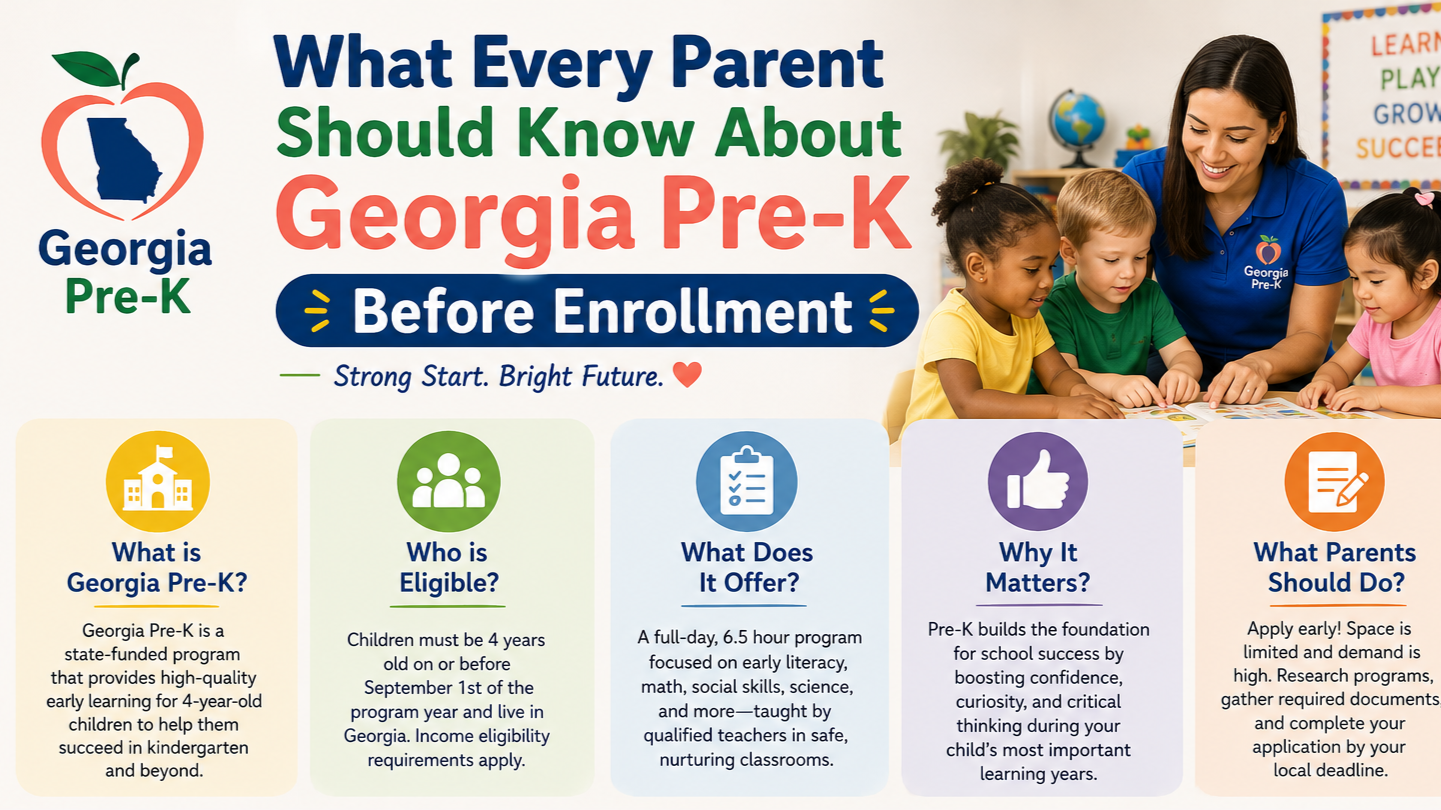
Choosing the right early education program is one of the most important decisions a parent can make, and Georgia Pre K has become a trusted choice for thousands of families across the state. As more parents understand how powerful the early years are for a child’s growth, the demand for quality preschool programs continues to rise. The first few years of life shape how a child learns, communicates, and connects with the world. That is why so many families want to be fully informed before they enroll their child in a structured learning program.
This guide is created to help parents understand what to expect, what questions to ask, and what truly matters when preparing a child for school. The goal is simple: give you clear, practical information so you can feel confident about this big step.
Children today are growing up in a fast-changing world. Strong early learning helps them build the skills they need to succeed both in school and in life. Research has shown again and again that the early years are when the brain develops the fastest.
A good preschool program supports more than just letters and numbers. It helps a child learn how to share, follow simple rules, manage emotions, and feel comfortable away from home. These skills become the foundation for everything that comes later.
When parents understand this, the choice of an early education program becomes less about convenience and more about long-term growth. That is why being informed before enrollment is so valuable.
Before enrolling, it helps to understand what this program is designed to do. Georgia Pre K is a state-supported program that focuses on preparing young children for kindergarten through structured, age-appropriate learning.
The program is built around the idea that children learn best through guided play, routine, and a caring environment. It is not about pushing children too hard. Instead, it gently builds the skills they need at the right pace.
Key goals of the program often include:
This type of program is designed mainly for children in the year before they start kindergarten. It welcomes children from many different backgrounds and learning levels. The aim is to give every child a fair and strong start, no matter where they begin.
Many parents wonder if a structured program is truly better than keeping a child at home a little longer. The honest answer is that structured learning offers benefits that are hard to recreate at home.
School readiness is one of the biggest reasons parents choose a preschool program. A child who is ready for kindergarten feels more confident and settles in faster.
A quality program helps children:
Early childhood is a sensitive time for emotional growth. In a supportive setting, children learn how to handle feelings like frustration, excitement, and disappointment.
Teachers gently guide children to:
This emotional strength helps children adjust better to school and to life in general.
Children are naturally social, but they still need guidance to interact well with others. A structured program gives them daily chances to practice these skills.
Through play and group activities, children learn to:
These early social skills support better relationships throughout their school years.
Once parents understand the value of early learning, the next step is choosing the right place. Not every program is the same, so it helps to know what truly matters.
Safety is always the first concern for any parent. Before enrolling, it is important to look closely at how a program protects children.
Parents should check for:
A safe environment allows children to relax and focus on learning. Families exploring options for a reliable Daycare in Roswell should always place safety at the top of their checklist.
The learning environment shapes how a child feels each day. A warm, welcoming classroom encourages children to explore and grow.
Look for spaces that offer:
When children feel comfortable, they are far more open to learning.
Teachers play a huge role in a child’s early experience. Good teachers do more than teach lessons. They notice each child’s needs and offer support and encouragement.
Strong teachers usually:
For parents searching for Toddler Daycare in Roswell, the quality of the teaching team should be a top priority. Caring teachers make a lasting difference in a child’s confidence and growth.
Young children feel safe when they know what to expect. A clear daily routine helps reduce stress and builds healthy habits.
A good routine often includes:
Structure helps children feel settled, and settled children learn better.
Enrollment is not only about the program. Parents also play an important role in helping a child feel ready for this new step.
A child who feels prepared will adjust more easily. Parents can support this in simple ways.
Helpful steps include:
Learning does not stop when the school day ends. Parents can gently support growth at home without pressure.
Easy ways to help include:
When home and school work together, children grow with confidence.
Even caring parents can make small mistakes during the enrollment process. Knowing them in advance can help.
Parents should try to avoid:
Taking time to make a thoughtful choice leads to a better experience for everyone.
The years before kindergarten are short but powerful. The habits, skills, and confidence built during this time often stay with a child for life.
A strong early start helps children:
This is why being fully informed before enrollment matters so much. A good decision now can support a child’s growth for many years.
Choosing the right early education path is a meaningful step in every child’s journey, and understanding the Georgia PreK program helps parents make that choice with confidence. From school readiness and emotional growth to social skills and safety, the early years shape how a child learns and connects with the world. When parents take the time to look closely at the learning environment, teachers, and daily routines, they give their child the best possible start.
Families looking for a trusted Daycare in Roswell or a caring Toddler Daycare in Roswell should always focus on safety, structure, and warm, qualified teachers. At Roswell Childcare Academy, we are committed to supporting every child’s growth in a safe, nurturing, and learning-focused environment.
If you are ready to give your child a strong and confident start, contact [Your Daycare Name] today to learn more about enrollment and schedule a visit. Your child’s bright future can begin with one thoughtful decision.
Most programs are designed for children in the year before kindergarten, usually around four years old. Age requirements can vary slightly, so it is best to check with the specific center. Enrolling at the right age helps your child gain the most from the program.
Preschool builds the early skills children need for kindergarten, such as listening, focus, and basic learning concepts. It also helps children get used to routines and group settings. This makes the move to kindergarten smoother and less stressful.
Some children do feel nervous at first, and that is completely normal. With caring teachers and a steady routine, most children adjust within a few weeks. Parents can help by staying calm and positive about the experience.
Look for secure entry points, clean classrooms, safe play areas, and trained staff. A personal visit is the best way to see how the center operates. Trust your instincts and ask plenty of questions before enrolling.
A good teacher is patient, kind, and skilled at working with young children. They communicate clearly with parents and create a calm classroom. Caring teachers play a major role in a child’s confidence and early learning.
Talk about preschool in a positive way and practice short separations at home. Set steady sleep and meal routines, and read books about starting school. Small steps like these help your child feel ready and comfortable.
Structured programs offer benefits that are hard to recreate at home, such as group learning and social practice. Children learn routines, communication, and emotional skills with guidance. This prepares them well for school and future growth.

Comments are closed