- Email: roswellchildcareacademy@gmail.com
- Phone: 470-282-1521
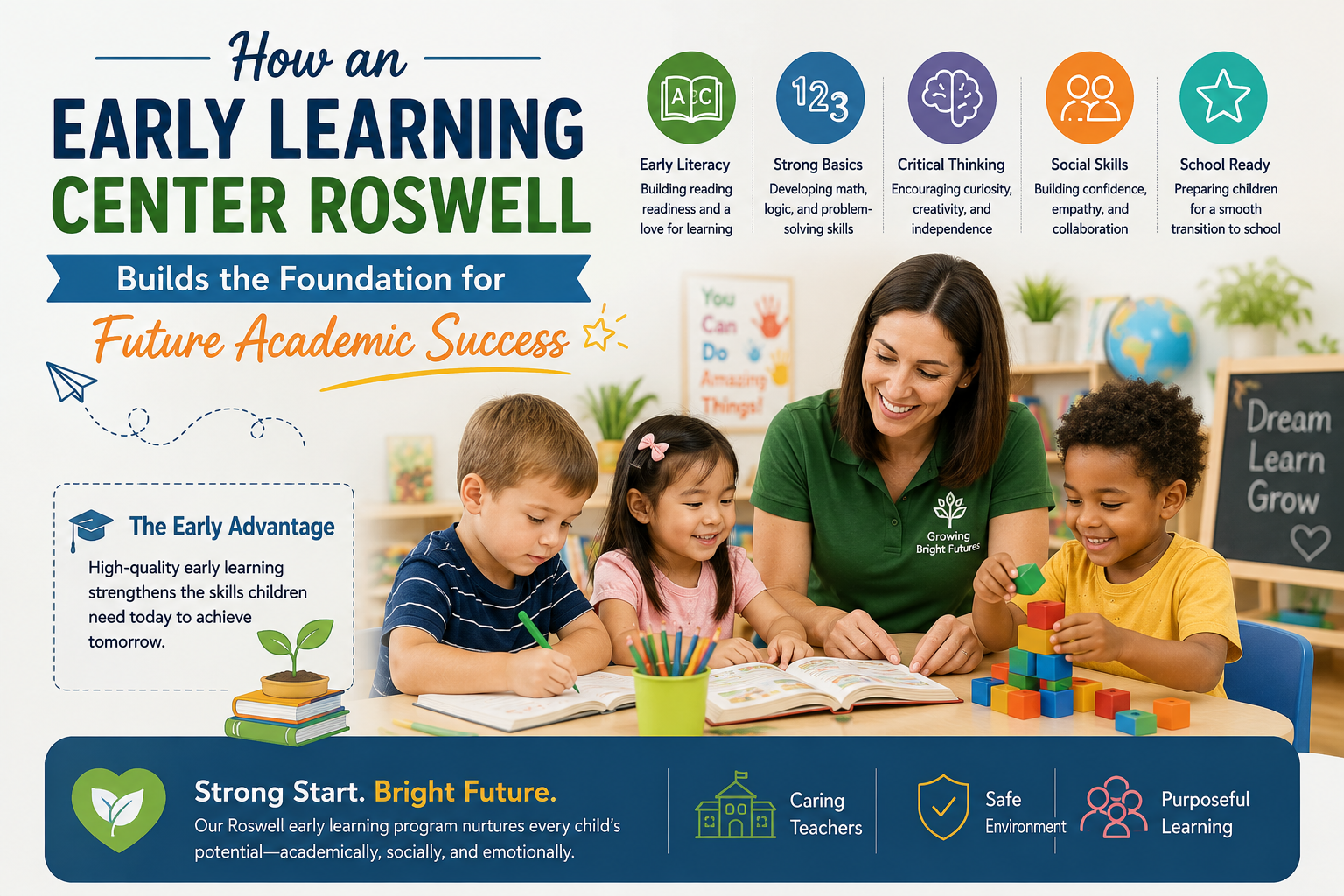
An early learning center Roswell families rely on builds future academic success by developing core skills early. Through play-based learning, strong routines, and warm relationships, children gain confidence, language, problem-solving, and social abilities. These early foundations make kindergarten easier and shape how a child learns for years to come.
If you have ever stood in your kitchen wondering whether your three-year-old is “ready” for anything, you are not alone. Most parents ask the same quiet question: Am I doing enough? You watch other kids count to twenty or write their names, and you start to worry. The truth is, those skills do not appear by accident. They grow from the everyday experiences a child has long before they ever step into a real classroom.
That is exactly where a good early learning center Roswell parents trust comes in. These are not babysitting services with toys scattered on a rug. The best programs are built around how young brains actually develop. They turn snack time, story time, and even a spilled cup of water into small lessons that stick.
Early childhood education matters now more than ever. Kindergarten today expects more than it did a generation ago. Children are asked to sit, listen, share, follow directions, and already know their letters and numbers. A child who walks in prepared feels confident. A child who feels behind on day one can start to dislike school before they even understand what school is.
This article walks you through how early learning shapes a child’s future, the mistakes parents often make, and what to look for when choosing care. You will leave knowing what really builds the foundation for academic success and how to spot a program that does it well.
A lot of parents picture early care as a safe place to leave a child while they work. Safety matters, of course. But a strong program does far more than keep kids busy until pickup.
At its heart, early learning is about building the brain during the years it grows fastest. By age five, a child’s brain has already formed most of its core connections. The experiences a child has in those years conversations, play, music, mistakes, and comfort literally shape how they think later.
Good teachers know this. So they design the day with purpose. Blocks teach early math. Pretend play teaches language and empathy. Singing teaches memory and rhythm. Even waiting for a turn teaches patience and self-control. None of it looks like a worksheet, and that is the point. Young children learn best by doing, not by sitting still.
The benefits add up quickly. Children in quality programs tend to have stronger vocabularies, better focus, and more confidence by the time they reach kindergarten. They also learn how to be part of a group, which is a skill no flashcard can teach.
For parents, there are a few things worth keeping in mind. A center should feel warm but organized. Free play is healthy, but pure chaos all day is not learning. You want a place where children feel free to explore inside a structure that gently guides them. That balance is the mark of a program that knows what it is doing.
Choosing a center is stressful, and stress makes us rush. Many loving, careful parents still trip over the same few mistakes. Knowing them ahead of time saves you a lot of second-guessing later.
Budget is real, and no one should pretend otherwise. But the cheapest option is not always the kindest one for your child. Low cost can sometimes mean fewer teachers per child, less training, or high staff turnover. Children thrive on consistency, so a center where teachers come and go every few months can quietly hurt your child’s sense of security. Look at value, not just the monthly number. Ask what that price actually includes.
A website can show you bright photos and happy promises. It cannot show you how the room feels at 10 a.m. on a Tuesday. Are children engaged or wandering aimlessly? Do teachers kneel down to talk to kids, or shout across the room? You learn more in twenty minutes of watching than in hours of reading reviews. Always visit. If a center makes visiting difficult, treat that as the answer.
Parents often talk themselves out of a clear feeling. The location is convenient, the price fits, the schedule works—so they ignore the small voice saying something feels off. That voice is information. If a place feels cold, rushed, or unsafe, trust it. A child cannot always tell you when something is wrong, so your instincts are part of their protection. The right fit usually feels right, too.
The early years touch every part of a child at once. Strong programs do not focus on one skill while ignoring the rest. They grow the whole child. Here is how that growth shows up:
When all five grow together, a child does not just know more. They feel ready. And a ready child walks into kindergarten curious instead of scared.
Early childhood education has changed, and mostly for the better. The old idea of drilling letters into toddlers has faded. In its place is a smarter, gentler approach backed by what we now understand about young brains.
A few clear trends stand out this year:
Play is finally respected as real learning. Modern programs build the day around guided play because that is how children absorb the most. Teachers set up activities with a goal in mind, then let kids explore. It looks like fun. It works like school.
Social and emotional skills get equal weight. Centers now spend real time helping children handle feelings, calm down, and treat each other kindly. Parents in 2026 expect this, and good programs deliver it.
Screen time is shrinking on purpose. After years of more screens, many families and centers are pulling back. The best early learning happens face-to-face, with real hands and real voices.
Communication with parents is constant. Daily photos, quick app updates, and honest conversations are now the norm. Parents want to feel included, not left guessing.
The expert recommendation is simple: choose programs that mix warmth with structure. Children need to feel loved and gently challenged. A center that offers only one without the other is missing half the picture.
Parents often use “daycare” and “early learning center” as if they mean the same thing. They can overlap, but the focus is usually different. This comparison can help you see what you are really choosing.
| Feature | Basic Daycare | Early Learning Center |
|---|---|---|
| Main goal | Supervision and safety | Development plus safety |
| Daily structure | Loose, flexible | Planned around learning |
| Teacher training | Varies widely | Early childhood focused |
| Curriculum | Often minimal | Age-based and intentional |
| School readiness | Not a priority | A core focus |
| Parent updates | Occasional | Frequent and detailed |
| Best for | Pure childcare needs | Long-term growth |
Neither choice is wrong. A family that only needs safe supervision may be perfectly happy with basic care. But if your goal is to build a strong foundation for school and beyond, a learning-focused program gives your child more to grow on.
Once you understand the difference, the choice gets easier. Still, picking the right place takes a little homework. These steps keep you focused on what matters:
Start with a visit, not a brochure. Walk through during a normal day. Watch how teachers speak to children and how children respond.
Ask about staff turnover. A team that stays for years is a great sign. It usually means happy teachers and stable care for your child.
Look at the daily routine. A predictable rhythm arrival, play, learning, meals, rest—helps children feel safe. Routine and consistency lower stress and support learning.
Check the teacher-to-child ratio. Fewer children per adult means more attention for your child. Ask for the real numbers, not a vague answer.
Notice the child engagement. Are kids interested and busy? Bored children wander. Engaged children are learning, even when it looks like play.
Trust how it feels. After the facts, listen to your instinct. You know your child better than anyone.
Take your time when you can. This decision shapes your child’s first real experience with learning, and that first impression tends to last.
Families in Roswell want the same thing parents everywhere want: a safe, caring place where their child can grow. But local context still matters. Roswell is a community full of busy working families, and parents here often juggle long commutes with the deep wish to give their kids a strong start.
That makes the search for an early learning center Roswell parents can rely on feel personal. You are not just looking for convenience. You are looking for people who will treat your child with the patience and warmth you would give yourself.
The good news is that early education options have grown across the area. Many preschools in Roswell now blend play-based learning with real preparation for kindergarten. Parents here tend to value programs that communicate openly, keep children safe, and treat each child as an individual rather than a number.
When weighing child development priorities, local families often look for steady routines, gentle structure, and teachers who clearly enjoy being with kids. Those things do not depend on a fancy building. They depend on people who care and a program built on solid early childhood education principles.
If you live in or near Roswell, you have choices and that is a gift. It means you can hold out for a place that truly fits your family instead of settling for the first open spot.
When you tour a program, it helps to have a short mental checklist. These are the signs of a center that takes its work seriously:
If a center checks most of these boxes, you are likely looking at a place that will help your child flourish.
The early years pass quickly, but their effects last a lifetime. What a child experiences before kindergarten shapes how they think, how they feel about themselves, and how ready they are to learn. That is a lot of weight resting on these small, playful days which is exactly why the right program matters so much.
We have covered a lot here. A quality early learning center Roswell families choose does far more than supervise. It builds cognitive skills, social skills, emotional growth, and communication development through play and routine. We looked at the common mistakes parents make, from choosing on price alone to ignoring that quiet gut feeling. We compared basic care with learning-focused programs, and we walked through how to make a confident choice.
The heart of it is simple. Strong early childhood education gives children confidence, curiosity, and a real head start. And the preschools in Roswell that do this well share the same traits: safety, warmth, structure, and genuine care for each child.
This is where a trusted program like Roswell Child Care Academy can make a real difference, offering the kind of nurturing, learning-rich environment that helps children step into kindergarten ready to thrive.
So if you have been carrying that worry Am I doing enough? let this be your answer. You do not have to do it all alone. The right early learning partner can carry that weight with you and help your child build a foundation that lasts.
Take the next step. Visit a program, ask your questions, and trust what you see and feel. Your child’s bright future starts with the choice you make today.
Many children start between two and three years old, though some programs welcome infants. There is no single right age. It depends on your child’s readiness and your family’s needs. The key is finding a program that matches your child’s stage. Quality early childhood education benefits children most when it offers warmth, routine, and age-appropriate play rather than pushing academics too early on a very young child.
Yes, though they can overlap. Basic daycare focuses mainly on safe supervision. An early learning center adds an intentional curriculum, trained teachers, and a focus on school readiness. Both keep children safe, but a learning-focused program plans the day around development. If your goal is to prepare your child for kindergarten and build long-term skills, the learning-focused approach usually offers more lasting value.
It builds the skills kindergarten expects. Children practice listening, following directions, sharing, and finishing tasks. They grow their vocabulary, learn early math and letters through play, and get used to a structured day. Just as important, they build confidence. A child who feels capable and calm walks into kindergarten ready to learn instead of overwhelmed, which makes the entire transition far smoother for everyone.
Watch how teachers interact with children do they kneel, listen, and stay patient? Check for safety, cleanliness, and a secure entrance. Notice whether children seem engaged and happy. Ask about teacher training, staff turnover, and the daily routine. Most of all, pay attention to how the place feels. A warm, organized environment with caring staff is a strong sign of a quality program.
Very important. Routine and consistency help children feel safe because they know what comes next. That sense of security frees their minds to explore and learn. A predictable rhythm arrival, play, learning, meals, and rest—also teaches early time management and self-control. Children in stable routines tend to be calmer and more focused, which directly supports their cognitive and emotional development during these key early years.
A good program manages this through small teacher-to-child ratios. Fewer children per adult means each child gets noticed, supported, and encouraged. When you tour, ask for the real ratio numbers. Group settings actually offer something home cannot: daily practice with social skills, sharing, and friendship. With caring teachers and reasonable group sizes, your child can get both individual attention and valuable social growth.
Watch for the signs at home. A child who is comfortable usually talks about friends or activities, separates more easily over time, and seems calm at pickup. Some clinginess at drop-off is normal early on. Stay in close contact with teachers and ask how your child spends the day. Open communication between you and the staff is one of the best ways to know your child is thriving.
Yes. Many preschools in Roswell are built with working families in mind, offering full-day schedules, flexible hours, and reliable routines. Beyond convenience, they give your child real developmental benefits while you work. The best ones keep you connected through regular updates, so you never feel out of the loop. For busy Roswell parents, a quality program offers both peace of mind and a strong start for their child.



Comments are closed