- Email: roswellchildcareacademy@gmail.com
- Phone: 470-282-1521
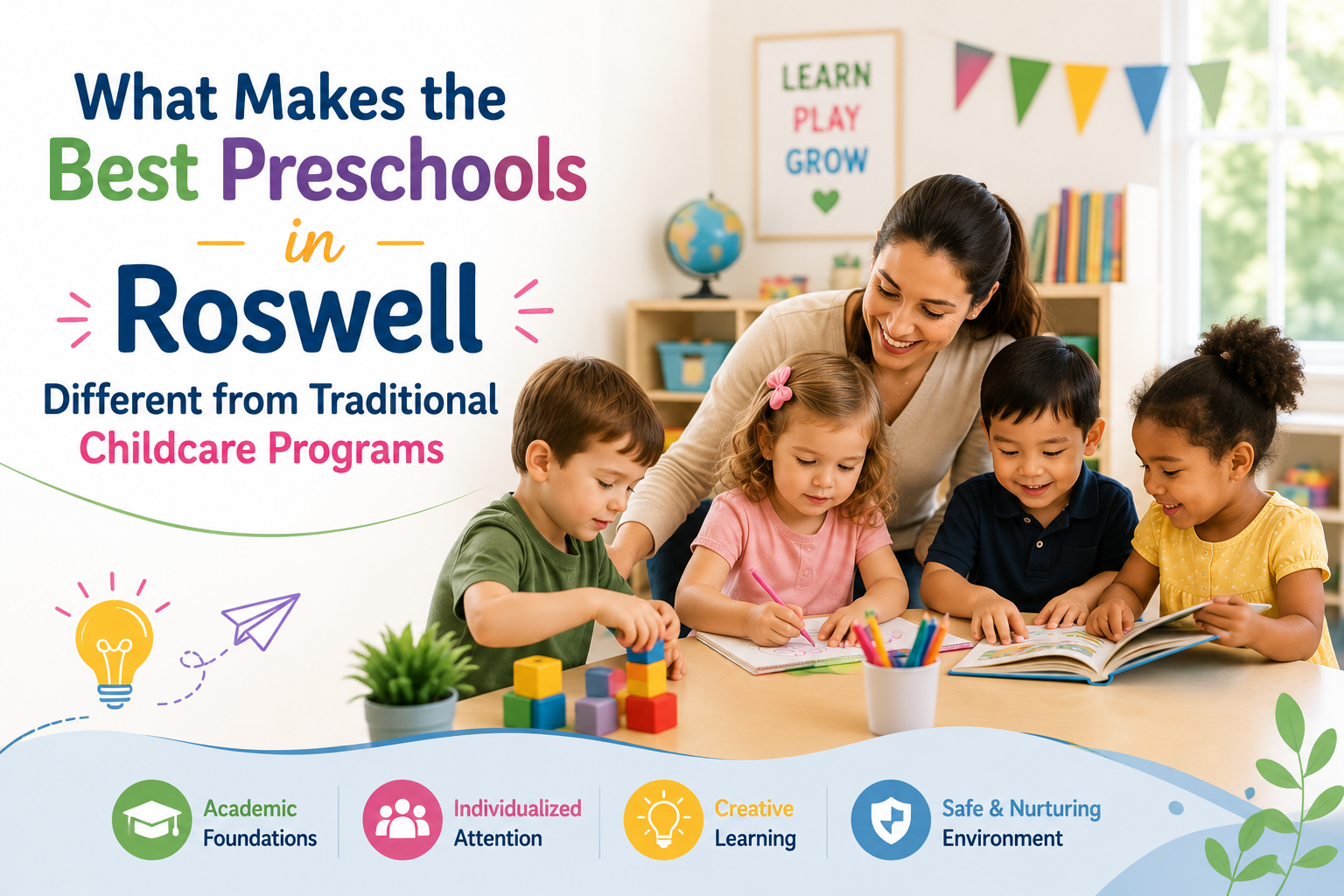
Choosing where your child spends their early years is one of the most important decisions a parent can make. As more families look beyond basic supervision, the demand for quality early education has grown and many parents now compare the best preschools in Roswell with traditional childcare programs to understand which truly supports their child’s growth. While both keep children safe and cared for, they are not the same thing.
A traditional childcare program often focuses on supervision, comfort, and meeting a child’s basic daily needs. A strong preschool goes a step further, building in structured learning, social development, and preparation for school. For parents who want their child to be ready, confident, and curious by the time kindergarten arrives, that difference matters.
This article breaks down what actually sets the best preschools apart, so you can make an informed choice based on your child’s needs and your family’s goals.
The first five years of a child’s life are a period of remarkable growth. During this time, the brain develops faster than at any other stage, shaping how a child learns, communicates, and connects with others. The environment they spend their days in plays a direct role in that development.
Today’s parents expect more from early care than past generations did. They want a setting that does more than watch their child one that actively helps them grow. That usually means looking for:
This shift in expectations is exactly why understanding the difference between preschool and traditional childcare has become so important.
At first glance, preschools and childcare programs can look similar. Both care for young children during the day, and both should keep them safe. The real difference lies in their purpose and how they choose to spend a child’s time.
Traditional childcare, whether home-based or center-based, generally centers on care and supervision. Its main strengths include:
This kind of care meets a real need, especially for very young children or families who need flexible schedules. Many parents searching for a Daycare in Roswell are looking for exactly this kind of dependable, everyday support.
A quality preschool builds on safe care by adding intentional learning. Instead of simply filling the day, it follows a plan designed to help children grow. The best preschools typically offer:
In short, traditional childcare keeps children safe and comfortable, while a strong preschool helps them learn and prepare for what comes next. The table below makes the contrast clearer.
| Area | Traditional Childcare | Quality Preschool |
| Main focus | Care and supervision | Learning and development |
| Daily activities | Mostly free play and rest | Planned, age-appropriate lessons |
| Staff | General caregivers | Trained early childhood teachers |
| School readiness | Limited | A core goal |
| Social-emotional learning | Informal | Intentional and guided |
| Progress updates | Occasional | Regular and structured |
Not all preschools are the same, and the strongest programs share a few clear qualities. When comparing preschools in Roswell, these are the features worth paying close attention to.
The best preschools combine structure with play. Young children learn best through hands-on activities, not long lessons, so a good curriculum uses play with a purpose. This might include:
The result is learning that feels fun to the child but is carefully planned by teachers.
Perhaps the biggest difference is the people in the room. Quality preschools employ teachers trained in early childhood education, not just general caregivers. These teachers know how to:
A skilled teacher can shape a child’s confidence and love of learning in ways that last for years.
School readiness is one of the clearest signs of a strong preschool. By the time children reach kindergarten, they are expected to handle routines, follow directions, and work in a group. The best preschools prepare them by helping them:
Children who arrive at school with these skills often feel more confident and settle in far more easily.
Strong early learning means little if a child struggles to manage feelings or get along with others. That is why the best preschools treat emotional and social growth as seriously as early academics.
In a preschool setting, children spend their day with peers, which gives them constant, natural practice in getting along. They learn to:
These skills form the foundation for healthy relationships throughout life.
Young children feel emotions strongly but don’t yet know how to manage them. Good preschools gently guide them through this. Teachers help children name their feelings, calm down when upset, and work through small frustrations. Over time, this builds patience, self-control, and confidence — qualities that support both learning and friendships.
For every parent, safety comes first, and a quality program never treats it as an afterthought. A trustworthy preschool combines a secure setting with a space designed for learning.
Look for programs that provide:
The environment itself shapes how children feel and learn. Bright, organized spaces with safe, age-appropriate materials invite children to explore with confidence. When comparing options for childcare in Roswell, visiting in person is the best way to judge both safety and atmosphere.
With several options available, finding the right fit can feel overwhelming. The good news is that a few clear questions can guide your decision.
Before enrolling, consider:
It also helps to visit, observe a class, and notice how teachers interact with the children. A warm, engaged, and organized setting is usually a strong sign. The right program should match both your child’s needs and your family’s values.
Choosing early care and education is a personal decision, and every option has its place. Traditional childcare offers safe, flexible, everyday support, while the best preschools add structured learning, skilled teachers, and real preparation for school. Understanding that difference helps parents choose with clarity and confidence.
If you are comparing preschools in Roswell, weighing a Daycare in Roswell, or exploring options for childcare in Roswell, the key is to look beyond basic supervision and find a program built around your child’s growth. [Business Name] is committed to providing a safe, nurturing, and learning-focused environment where children can thrive and get ready for school.
To see how the right preschool program can support your child’s early years, schedule a visit or get in touch with [Business Name] today and take the next step with confidence.
A daycare mainly focuses on safe supervision and meeting a child’s daily needs, often with flexible hours. A preschool adds structured learning, trained teachers, and school readiness goals. Many families choose a preschool when they want their child to learn and prepare for kindergarten, not just be cared for.
Most children begin preschool between ages three and four, though some programs accept younger toddlers. The right time depends on your child’s readiness, including their comfort with routines and being away from parents. Visiting a program and talking to teachers can help you decide.
Quality preschools build school readiness through routines, early literacy and math, and social skills. Children learn to follow instructions, take turns, and focus on short tasks. This preparation helps them feel confident and settle in more easily once kindergarten begins.
Reputable preschools make safety a top priority with licensed facilities, low teacher-to-child ratios, and clear emergency procedures. Rooms are childproofed, clean, and well-organized. Always confirm a program’s licensing and safety policies, and visit in person before enrolling.
For many families, the added value of structured learning, qualified teachers, and school readiness makes preschool worthwhile. Traditional childcare may cost less and offer more flexibility, but it usually focuses on supervision. The right choice depends on your goals and budget.
Look for trained early childhood teachers, a clear curriculum, a safe and clean environment, and strong parent communication. Watch how teachers interact with children during a visit. A warm, organized, and engaged setting is usually a sign of a quality program.
Yes. Preschool gives children daily practice in sharing, cooperating, and making friends. Teachers also help them name and manage their emotions. This support builds confidence, patience, and social skills that benefit children well beyond the classroom.
Comments are closed