- Email: roswellchildcareacademy@gmail.com
- Phone: 470-282-1521
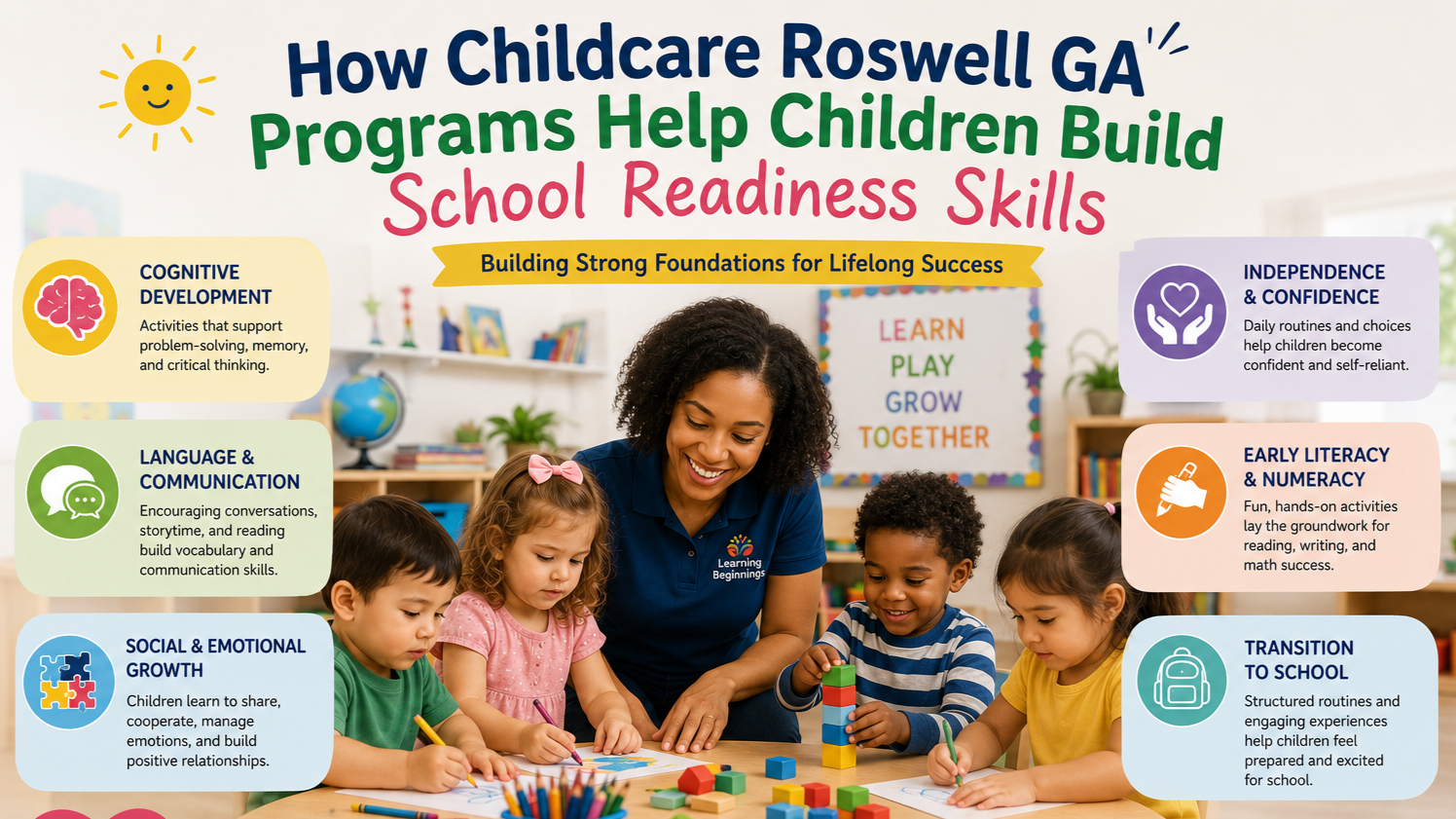
Choosing the right childcare Roswell GA program is one of the most important decisions a parent can make in the early years of a child’s life. The time before kindergarten is when children grow the fastest not just in size, but in how they think, feel, speak, and connect with others. Parents today want more than a safe place for their child to spend the day. They want a program that prepares their child for school, builds confidence, and supports healthy growth in every way. That is why understanding how quality childcare supports school readiness matters so much.
School readiness is not only about knowing letters and numbers. It includes how a child listens, follows directions, plays with others, manages feelings, and adjusts to new routines. A strong early learning program helps build all of these skills in a gentle, age-appropriate way. In this article, we will explain how quality childcare programs in Roswell, GA help children get ready for school and life.
The early years shape the foundation for everything that comes later. Research in early childhood development shows that the brain grows faster between birth and age five than at any other time. The experiences a child has during these years affect how well they learn, focus, and handle challenges in school.
When children start kindergarten without basic readiness skills, they often struggle to keep up. They may find it hard to sit still, share, or follow group instructions. A good childcare program prevents this gap by helping children practice these skills early, in a supportive setting.
Many parents think school readiness is only about academics. In truth, it covers several connected areas of growth. A quality childcare program looks at the whole child, not just one part.
School readiness usually includes these main areas:
A strong program builds all of these areas together. This balanced approach helps children feel confident and capable when they enter kindergarten.
Quality childcare gives children daily chances to learn through play, routine, and guided activities. Young children learn best when learning feels natural and fun.
Play is the main way young children learn. In a well-planned program, play is not random — it is carefully guided to teach real skills. Through play, children learn to solve problems, use new words, and think creatively.
Examples of learning through play include:
This kind of structured learning keeps children interested while building school-ready skills step by step.
Children feel safe when they know what to expect. A steady daily routine helps them feel secure and in control. It also teaches them how a school day works.
A predictable routine helps children:
When children are used to routines, the move to kindergarten feels familiar instead of scary.
School is a social place. Children must learn to work in groups, make friends, and handle their feelings. These skills are just as important as letters and numbers.
In a childcare setting, children spend each day around other children their age. This gives them real chances to practice social skills in a guided way.
Through daily group activities, children learn to:
These early social lessons help children build friendships and feel comfortable in a classroom.
Young children feel big emotions but do not always know how to handle them. A caring childcare program helps children name their feelings and learn healthy ways to cope.
Teachers support emotional development by:
When children learn to manage feelings early, they are better prepared to focus and learn in school.
Safety is the first thing every parent thinks about. A trusted Roswell Childcare Academy understands that children learn best when they feel safe, comfortable, and cared for.
A safe and supportive environment includes more than locked doors. It covers the physical space, the daily care, and the emotional warmth children receive.
Key features of a safe learning environment include:
When children feel safe, they are free to explore, ask questions, and learn without fear.
The space around a child shape how well they learn. A bright, organized, and calm room helps children focus. A loud or messy space can make them feel stressed and distracted.
A good learning environment supports child growth by:
This is why many parents searching for a daycare in Roswell look closely at the learning space before they decide.
Childcare does not only help children it supports the whole family. When parents know their child is safe, learning, and happy, they feel less stress and more peace of mind.
Choosing the right program can feel overwhelming. A quality childcare center makes this easier by keeping parents informed and involved.
Good programs support parents by:
This partnership between parents and teachers helps children grow faster and feel more supported.
When parents and childcare teachers work together, children benefit the most. A strong connection keeps learning steady between home and school.
Parents can support school readiness at home by:
Small steps at home, combined with quality childcare, create the best results for young children.
Not every program offers the same level of care and learning. Parents should look closely before making a choice.
When comparing childcare programs, parents should check:
A program that offers all of these gives children the best start for school and life.
The goal of quality childcare is to help children walk into kindergarten feeling ready and confident. By the time they finish a strong program, children are usually able to:
These skills help children feel proud and prepared on their first day of school. Instead of feeling nervous, they feel excited and capable.
The early years are too important to leave to chance. A quality childcare Roswell GA program gives children the skills they need to feel ready, confident, and excited for school. From early learning and structured play to social skills, emotional growth, and a safe learning environment, the right program supports every part of a child’s development.
For parents, choosing a trusted Roswell Childcare Academy means more than finding a safe place during work hours. It means giving your child a strong foundation for school and life. A well-run daycare in Roswell builds confidence, encourages curiosity, and prepares children for a smooth kindergarten start.
If you are looking for a caring and trusted childcare program, Roswell Childcare Academy is here to help your child grow, learn, and thrive. Contact us today to schedule a visit and see how our programs prepare your child for a bright and successful future.
Most children benefit from starting childcare between the ages of two and four. This is when social, emotional, and early learning skills grow quickly. Starting early gives children more time to build confidence and school readiness before kindergarten.
Childcare programs help children practice listening, following directions, sharing, and managing feelings. They also build early skills in language, numbers, and problem-solving. This balanced learning prepares children to feel comfortable and capable in kindergarten.
Yes, play is one of the most powerful ways young children learn. Guided play teaches problem-solving, language, focus, and social skills. A good program uses play with purpose, so children build real skills while staying interested and happy.
Look for clean classrooms, secure entry, trained teachers, and clear safety routines. A safe program also feels warm and welcoming for children. Visiting in person is the best way to see how children are cared for each day.
Children learn to share, take turns, listen, and solve small conflicts with words. They also practice kindness, patience, and teamwork. These skills help them build friendships and feel confident in a classroom setting.
You can read together daily, keep steady routines, and encourage simple independent tasks. Talking about feelings and daily events also helps a lot. When home and childcare work together, children grow faster and feel more secure.
Children who manage their emotions well can focus better and handle challenges calmly. Emotional skills help them adjust to new routines and group settings. This makes the move to kindergarten much smoother and less stressful.

Comments are closed