- Email: roswellchildcareacademy@gmail.com
- Phone: 470-282-1521
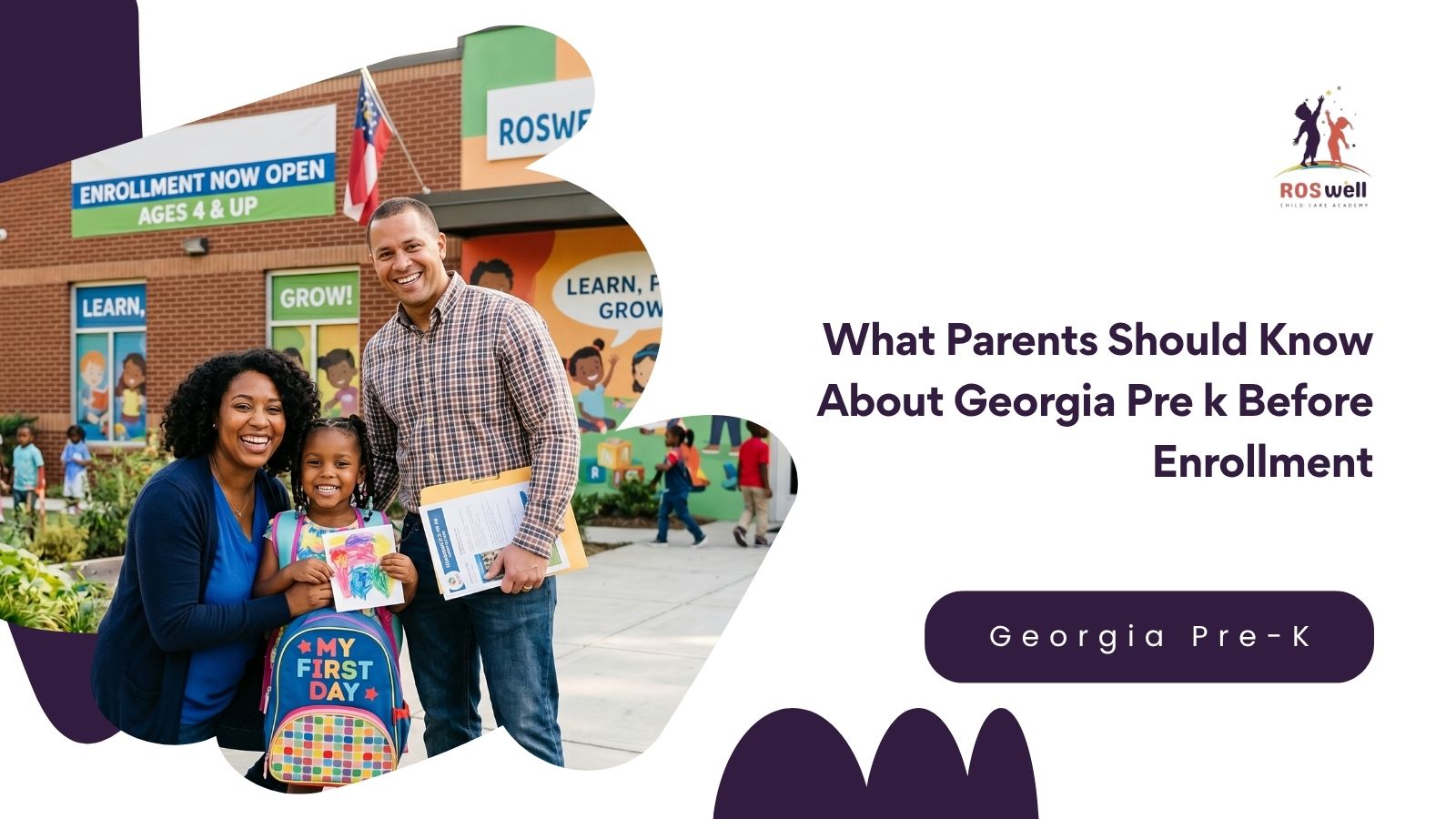
Choosing the right early learning program for your child is one of the most important decisions you will make as a parent. For families across the state, Georgia Pre-K has become one of the most trusted options available and for good reason. It is a state-funded program designed to prepare four-year-olds for kindergarten through structured, age-appropriate learning. But before you enroll your child, it helps to understand exactly what the program offers, what to expect from the experience, and whether it is the right fit for your family’s needs and goals.
Many parents feel uncertain during this stage. Some wonder if their child is ready. Others want to know how the classroom environment works, what skills will be developed, and how the program compares to other early childhood options. This article answers those questions clearly and gives you the information you need to make a confident, informed decision.
Georgia Pre-K is a voluntary early childhood education program offered to four-year-old children living in the state of Georgia. It is funded through the Georgia Lottery for Education and is managed by Bright from the Start: Georgia Department of Early Care and Learning (DECAL).
The program is available at no cost to eligible families, regardless of household income. Children must turn four years old by September 1st of the school year they enroll in. Spots are limited and offered through a lottery system in many areas, so early registration is strongly encouraged.
This program runs for a full school day, typically six and a half hours, five days a week. That structure alone helps children transition more smoothly into kindergarten later on.
The curriculum used in Georgia Pre-K is built around the Georgia Early Learning and Development Standards (GELDS). These standards cover five key areas of development that matter most during the preschool years.
Children in Pre-K are introduced to the building blocks of reading and writing in a way that feels natural and engaging. They learn to recognize letters, understand that print carries meaning, listen to stories, and begin forming simple words and sentences. By the time they finish the program, most children can identify many letters of the alphabet, understand basic phonics concepts, and communicate their thoughts more clearly.
Early math in Pre-K goes beyond counting. Children explore shapes, patterns, measurement, and basic problem-solving. These activities build the kind of critical thinking skills that benefit children for years beyond preschool.
Children are naturally curious, and the Pre-K curriculum encourages that curiosity. Through simple observations, experiments, and discussions, they begin to understand how the world works from weather and seasons to living things and basic cause and effect.
Even at four years old, children can begin to understand concepts like family, community, and belonging. These lessons help them develop respect for others and a sense of where they fit in the wider world.
Music, movement, art, and dramatic play are all part of the Pre-K experience. These activities are not just fun they build motor skills, self-expression, imagination, and confidence.
Academic readiness is important, but social and emotional development is just as critical during the preschool years. In fact, research shows that children who develop strong emotional skills early tend to perform better academically and socially throughout their school years.
In a Georgia Pre-K classroom, children learn to:
These skills do not develop overnight. They grow through consistent daily interactions with teachers and peers. Pre-K gives children a safe, structured environment where they can practice these skills regularly something that is harder to replicate at home or in less structured settings.
School readiness is not just about knowing the alphabet or being able to count to ten. It is about whether a child is socially, emotionally, and cognitively prepared to thrive in a kindergarten classroom.
Children who attend quality pre-K programs are generally more prepared because they are already used to:
Teachers in Georgia Pre-K use structured lesson plans while also leaving room for play-based learning. This balance is intentional. Play is how young children process and retain new information. By weaving learning into meaningful activities, teachers help children build a strong academic foundation without creating stress or pressure.
Understanding the daily structure can help both you and your child feel more prepared before the first day arrives.
A typical Georgia Pre-K Day might include:
This consistent structure gives children a sense of safety and predictability. When children know what to expect, they feel more secure and that security makes them more open to learning.
Not all Pre-K classrooms look the same. While all Georgia Pre-K programs follow the same curriculum standards, the setting can vary from public school classrooms to licensed private childcare centers. The overall environment, staff quality, and approach to learning can differ from one location to another.
For families in the greater Atlanta area who are also exploring full-day childcare options, daycare in Roswell has become an increasingly popular choice. Many childcare providers in the area now offer Pre-K programming as part of their services, giving families the flexibility of extended care alongside structured early education.
When evaluating any Pre-K program, here are some important things to look for:
If your child needs care before or after Pre-K hours, looking into toddler daycare in Roswell or nearby centers that offer wraparound care alongside Pre-K is a practical option worth exploring. Many families find that combining Pre-K with quality daycare support creates a more seamless and less stressful experience for both parent and child.
Every parent’s first concern is their child’s safety. Georgia Pre-K programs are required to meet strict health, safety, and licensing standards set by DECAL. These include guidelines for:
It is completely appropriate to ask any program about its safety policies before enrolling. A good Pre-K provider will be transparent and happy to walk you through how they protect the children in their care.
Georgia Pre-K teachers work hard inside the classroom, but parents play a critical role in reinforcing that learning at home. You do not need to run structured lessons at home simple, consistent habits make a big difference.
Here are a few practical ways to support your child’s Pre-K experience:
Children learn best when the adults in their lives are engaged, consistent, and encouraging. The more connected you stay with your child’s learning, the better they tend to do.
Deciding to enroll your child in Georgia Pre-K is a meaningful step toward giving them a strong start in life. The program is designed to build the academic, social, and emotional skills children need to enter kindergarten with confidence and to stay curious and capable long after that.
For families in the area exploring all their options, looking into quality daycare in Roswell that offers Pre-K programming can provide the structure and care your child needs in one place. If your child is younger or not yet at Pre-K age, toddler daycare in Roswell can also help establish early routines that make the Pre-K transition smoother when the time comes.
At Primrose School, we are committed to nurturing every child’s growth through high-quality, research-based early education in a warm and welcoming environment. If you are ready to take the next step, we invite you to schedule a tour and see firsthand how we support children and families throughout this important stage. Contact us today to learn more about enrollment options and how we can be part of your child’s early learning journey.
Yes, Georgia Pre-K is funded by the Georgia Lottery for Education and is available at no cost to eligible families, regardless of income level. Families do not need to meet any financial criteria to qualify. However, seats are limited and not guaranteed, so registering early is strongly recommended to improve your child’s chances of being selected.
Children must turn four years old on or before September 1st of the school year they are enrolling in. Children who turn four after that cutoff date will need to wait until the following school year to be eligible. Georgia residency is also required for all enrollees.
Georgia Pre-K follows a state-mandated curriculum aligned with the Georgia Early Learning and Development Standards, with a focus on kindergarten readiness. Regular daycare may offer care and supervision without the same level of structured, curriculum-driven learning. Many families choose programs that offer both Pre-K and childcare services together for convenience and continuity.
During a visit, pay attention to how the teachers interact with the children — are they warm, patient, and engaged? Look at the classroom environment to see if it is clean, organized, and rich with learning materials. Ask about teacher qualifications, the daily schedule, communication practices with parents, and how the program handles safety and emergencies. Trust your instincts about how the space feels overall.
Absolutely. Play is a core part of quality early childhood education. Georgia Pre-K classrooms use play-based learning methods that allow children to explore, create, and collaborate in ways that naturally support their development. Structured play and teacher-guided activities work together to build both academic and social skills throughout the day.
Start by talking with your child about what school will be like — use positive, simple language and focus on fun aspects like making friends and doing art or reading. Practice the morning routine a week or two before school starts. Make sure your child is getting enough sleep and eating well. Visiting the school before the first day, if possible, can also help reduce first-day anxiety for both child and parent.
Georgia Pre-K welcomes children with a wide range of abilities and works to create inclusive classroom environments. If your child has an Individualized Education Program (IEP) or developmental concerns, speak directly with the program director and your child’s pediatrician or early intervention specialist. Many Pre-K programs coordinate with specialists to provide appropriate support within the classroom setting.
Yes. Many Pre-K programs, especially those housed within licensed childcare centers, offer wraparound care services that extend beyond the standard Pre-K hours. This allows working parents to enroll their child in the Pre-K program while still having reliable childcare coverage for the full workday. Ask any program you are considering whether extended care is available and how it is structured.

Comments are closed