- Email: roswellchildcareacademy@gmail.com
- Phone: 470-282-1521
If you are a parent trying to make a smart choice for your child’s early years, understanding Georgia Pre k can really help you see what truly matters. A good pre-k setting can shape the way a child learns, speaks, plays, and solves small problems every day. At Roswell Child Care Academy, the focus is on a play-based, child centered approach, with programs for infants, toddlers, preschoolers, enrichment, and even summer camp, along with strong safety, meals, and regular parent communication.
The reason many families look at it so closely is simple: the early years matter a lot. Children do not just learn letters and numbers in this stage. They also learn how to listen, wait, share, ask questions, and try again after a mistake. That is a big deal, because these small things often become the base for future school success and personal confidence.
For parents comparing child care in Roswell and daycares in roswell, the big question is not only “where will my child stay during the day?” It is also “where will my child grow in the best way?” A strong pre-k environment answers both questions. It gives care, but it also gives purpose, routine, and gentle learning that feels natural to young children.
Early childhood is a short phase, but it leaves a long mark. Children in this age group are still learning how to manage feelings, how to follow simple directions, and how to join group play without feeling lost. When they get the right help early, they usually settle into school life with less fear and more trust.
A good pre-k setting gives children many chances to practice small but important skills. They learn to pack up toys, take turns, raise a hand, and finish a task. None of that looks huge on its own, but all of it adds up. That is also where Georgia Pre k starts to feel very real to parents.
Children grow best when learning is not pushed too hard. A calm routine helps them feel safe enough to try. Over time, they start to enjoy learning instead of fearing it. That shift is one of the most valuable parts of Georgia Pre k.
Some of the most useful habits children build at this stage are:
These may look like small wins, but they are the kind of wins that make school feel less scary later.
A strong pre-k setting is not about fancy walls or loud promises. It is about the daily experience a child has inside the classroom. The most helpful programs are usually warm, steady, and easy to trust. In a well-run Georgia Pre k classroom, the little things matter just as much as the big ones.
Roswell Child Care Academy describes a safe and nurturing place where children learn through creative, hands-on experiences, with trained educators, individualized attention, and a comprehensive curriculum that supports social-emotional, cognitive, visual, emotional, and physical development. It also highlights secure facilities, low teacher-to-child ratios, open parent communication, and nutritious meals.
That kind of setup matters because children do not all learn the same way. Some need a little more time. Some need more movement. Some need more help with talking. Some are ready to jump in fast. The best early learning programs notice these diffrent needs and respond in a gentle way.
When a child feels noticed, they usually open up more. They start speaking, asking, and exploring with more confidence. That is why small class sizes and personal attention can make a real difference.
Parents looking at a local care program often want that personal feel. They do not want their child to disappear in a busy room. They want a place where teachers know names, moods, and small daily changes. That kind of care builds trust for both children and parents.
Many adults think school has to feel serious to be useful. For young children, that is usually not true. Play is one of the best ways they learn. Through play, they practice language, problem-solving, movement, and imagination all at once.
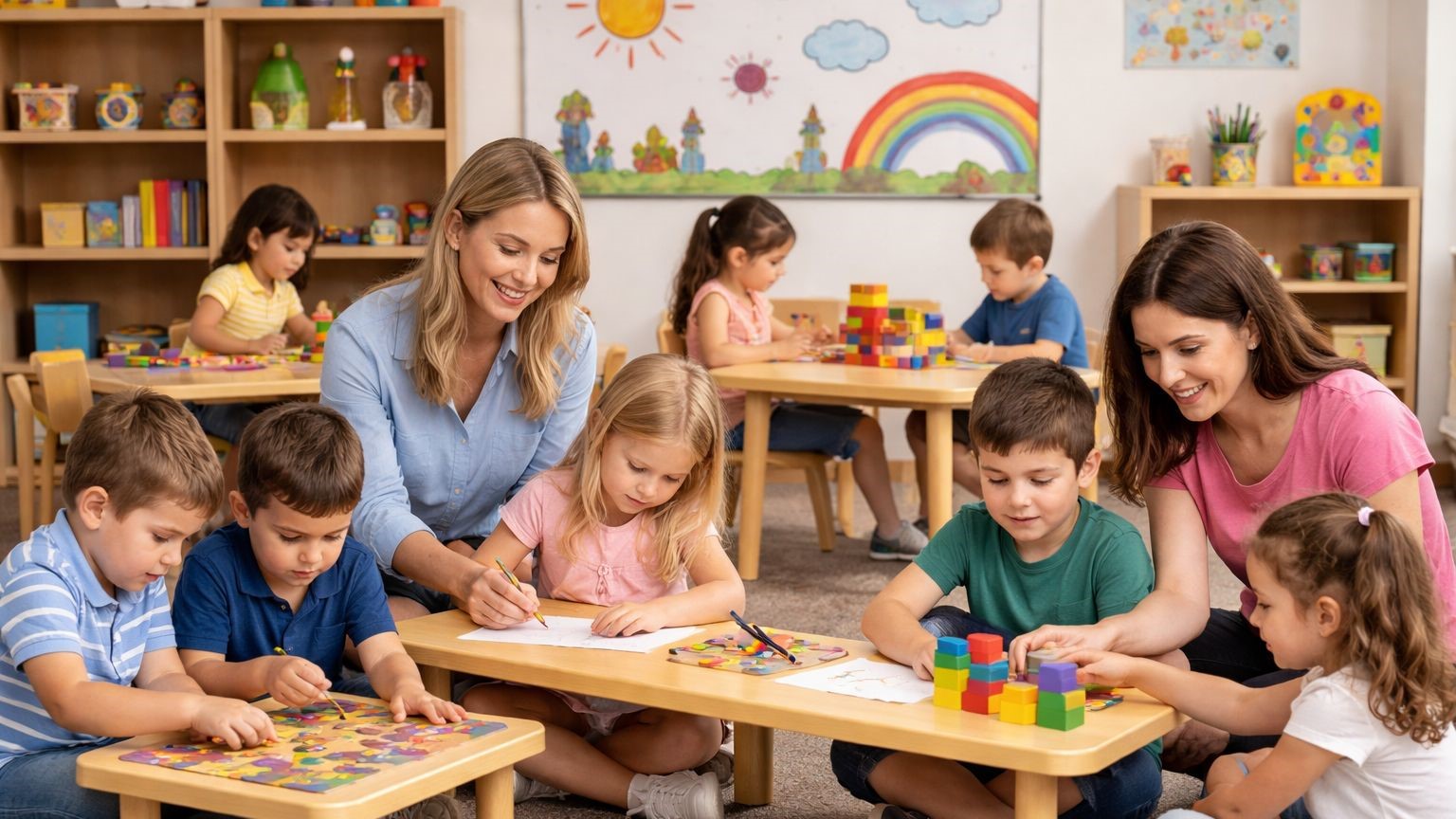
At Roswell Child Care Academy, the site emphasizes play-based learning, imaginative play, hands-on experiences, and cooperative learning. It also notes that the curriculum is designed to build more than subject skills, including social-emotional growth and critical thinking.
That means a child might be building with blocks, sorting shapes, painting, singing, or acting out a pretend story—and still learning deeply. It does not look like a test, but it is real learning.
Children remember things better when they connect them to action. If they touch, move, sing, or build something, the lesson tends to stick. That is one reason Georgia Pre k can feel so effective without feeling stressful. In fact, many families notice that Georgia Pre k feels less like pressure and more like healthy, steady growth. For a lot of families, Georgia Pre k becomes the moment school starts to feel friendly instead of scary.
It also helps children stay interested. When learning feels like a game, they are less likely to shut down or get bored. That makes early education more enjoyable and more useful at the same time.
Confidence does not appear all at once. It grows in tiny steps. A child may first feel proud for putting away a toy, then for answering a question, then for speaking in front of a group. Those little moments matter.
A quality pre-k classroom gives children many chances to succeed in small ways. The teacher might ask them to choose an activity, greet a friend, or help clean up after snack time. Each moment teaches, “I can do this.”
Over time, this feeling becomes stronger. Children begin to trust their own voice. They stop giving up so quickly. They become more willing to try new things, even when they are unsure.
A confident young child may:
These are not just classroom skills. They are life skills. And yes, they start early.
Some parents focus only on academics at first, which is understandable. But in early childhood, social growth matters just as much. A child who can talk kindly, wait their turn, and work with others often learns better in every subject.
That is why structured group time matters so much. Children learn how to be part of a class, not just a room. They learn that other people have ideas too. They learn patience, respect, and simple teamwork. Georgia Pre k gives them that first safe practice space.
A good early learning center makes these lessons part of everyday life, not just something taught once in a while. When that happens, children start carrying good behavior into home life too.
For many families comparing local daycare options, this is where the difference becomes clear. A daycare may give care and comfort, but a strong pre-k program adds guided social learning that helps prepare children for school routines.
Young children are learning words at a rapid pace. They hear, repeat, test, and mix up new words all the time. This is the best time to support speech, listening, and simple conversation skills.
Teachers can help by asking open questions, reading aloud, naming objects, and talking through daily routines. These simple actions sound small, but they really matter. They help children understand more and speak with more ease.
When children hear language used in many ways, they start using it more naturally too. That can make school transitions easier and less confusing. In a good Georgia Pre k class, talk and listening go hand in hand.
Children feel safer when life has a pattern. A steady routine tells them what comes next, and that lowers stress. It also helps them become more independent because they start to understand daily flow. That is one more reason Georgia Pre k works so well.
In a good pre-k setting, children usually know when to arrive, when to play, when to clean up, when to eat, and when to rest or move to the next activity. This simple structure gives them direction without making them feel trapped.
That is why Georgia Pre k can be so useful for families who want more than random care. It brings order to the day in a friendly way. For many homes, Georgia Pre k becomes the first place where school life starts to feel normal.
A child is not only a mind or a student. They are also a body, a heart, and a social person. A good pre-k program should support all of these parts together. That is the real promise of Georgia Pre k when it is done with care.
Roswell Child Care Academy’s website says its curriculum is built to support cognitive, social, visual, emotional, and physical growth, and that it uses age-appropriate curricula for different groups. It also says the school offers music, dance, foreign language, STEM, art, and outdoor play as part of enrichment.
That kind of whole-child focus helps children feel balanced. They are not only sitting and listening. They are moving, creating, talking, and building strength in many areas at once.
A child usually does better when the day is varied. Too much of one thing can make them tired or restless. Balance keeps them engaged.
A child cannot learn well if they do not feel safe. Safety is not just about locked doors or rules. It is also about emotional safety. Children need to know they will be treated kindly, noticed quickly, and helped when they are upset.
The website for Roswell Child Care Academy says the facility includes secure entry systems, surveillance cameras, childproofed environments, CPR and first aid training, and strong visitor and emergency procedures. It also says parents can visit during the day and receive regular updates.
That kind of trust makes a big difference. When parents trust the place, children often sense that calm too. And when children sense calm, they adjust better.
Food and routine go together in early childhood. Snack and meal times are not only about eating. They are also about learning manners, patience, and simple self-care.
The website says nutritious meals and snacks are provided, with fruits, vegetables, whole grains, and lean proteins, and that allergy needs are handled carefully.
That matters because young children are still building habits. A steady food routine can support energy, focus, and healthy growth. It also teaches children that mealtime is a calm and respectful part of the day.
This is a very common question. Parents often wonder whether they need daycare or pre-k. The answer depends on the child’s age and goals.
Some families begin with care for younger children and later move into a more school-ready setting. Others want both care and learning from the start. In either case, the aim is the same: a place where children are safe, supported, and growing.
The programs listed on the Roswell Child Care Academy website include infant day care, toddler activities, preschool activities, early childhood education, day care, and a summer camp option, which shows a wide range of care and learning support across age groups.
For parents searching daycares in roswell, that variety can help them choose a setting that fits the child’s stage instead of forcing one program to do everything.
Kindergarten can feel like a huge step. Children are expected to listen more, sit longer, follow directions, and join larger groups. That is a lot for a little one who is still learning how school works.
A strong pre-k program reduces that shock. It helps children practice the same kinds of skills they will use in kindergarten, but in a softer way. They learn how to line up, join group time, follow classroom rules, and shift from one activity to another. That is why many parents see Georgia Pre k as a bridge. It connects home life to school life without making the jump too sudden. A strong Georgia Pre k program gives children a soft start, not a rough one. In that kind of setting, Georgia Pre k feels less like a big leap and more like a gentle next step. It can make the first school years feel far less scary.
That is why Georgia Pre k shines. It does not rush childhood. It supports their growth in a patient and caring way.
Children often build readiness through:
These skills may not look flashy, but they are powerful. They help a child walk into kindergarten with less fear and more comfort.
Parents do not just want a program that looks good on paper. They want daily peace of mind. They want to know their child is learning, eating, resting, and being treated well.
That is why communication matters so much. Roswell Child Care Academy says it provides daily reports, parent-teacher meetings, a parent portal, and open communication with families. It also mentions parent involvement through events and workshops.
When parents stay informed, they feel more connected. And when parents feel connected, children often benefit too. Everyone works better as a team.
A child does not need a perfect day to grow. They need a stable one. A good class might start with greetings, then move to play, a lesson, snack, creative work, and a bit of movement. It sounds simple because it is. But simple done well is very powerful.
Children learn best when the classroom rhythm feels familiar. They know what to expect, yet they still get new things to discover. That balance helps them stay calm and curious.
This is where Georgia Pre k shines. It does not rush childhood. It supports their growth, learn, and feel ready for what comes next.
Many adults look back and realize that their strongest habits started very young. A child who learns patience early may find group work easier later. A child who learns to speak up may handle school more easily. A child who learns to trust adults may adjust better in new settings.
That is why early education should never be seen as just “baby school.” It is a real base for later learning and personal growth.
In places where child care in Roswell is widely searched, parents often want both safety and real development. They want more than just time passing. They want progress they can see.
There is no perfect center for every child, but there is a right fit for each family. Parents should look for warmth, consistency, clear routines, and real communication. They should also look for teachers who understand child development, not just supervision.
A good place usually feels calm when you walk in. Children look settled, teachers look alert, and the program feels intentional. That is often a better sign than a flashy ad.
If a center offers age-appropriate learning, kindness, and strong family connection, that is a great start. And when those things show up together, the child usually gets the best chance to thrive.
Most children join around age four, since the program is built to prepare them for kindergarten. The exact fit can depend on your child’s readiness and local program rules.
No, it is also about social skills, confidence, routine, and emotional growth. Children learn to interact, follow directions, and feel comfortable in a classroom.
Look for safety, trained staff, age-appropriate learning, good communication, and a warm classroom feel. A place that supports both care and growth is usually the strongest choice.
Yes, confidence grows through small daily wins. When children are encouraged, heard, and guided gently, they usually become more willing to try new things.
Georgia Pre k gives children a real chance to grow in a setting that feels safe, steady, and full of purpose. It helps them learn basic school skills, build confidence, and get ready for the next stage without feeling rushed. At Roswell Child Care Academy, the listed programs, play-based learning, safety steps, parent updates, and age-focused curriculum all point to a child-centered approach that many families look for when comparing child care in Roswell and daycares in roswell.



Comments are closed