- Email: roswellchildcareacademy@gmail.com
- Phone: 470-282-1521
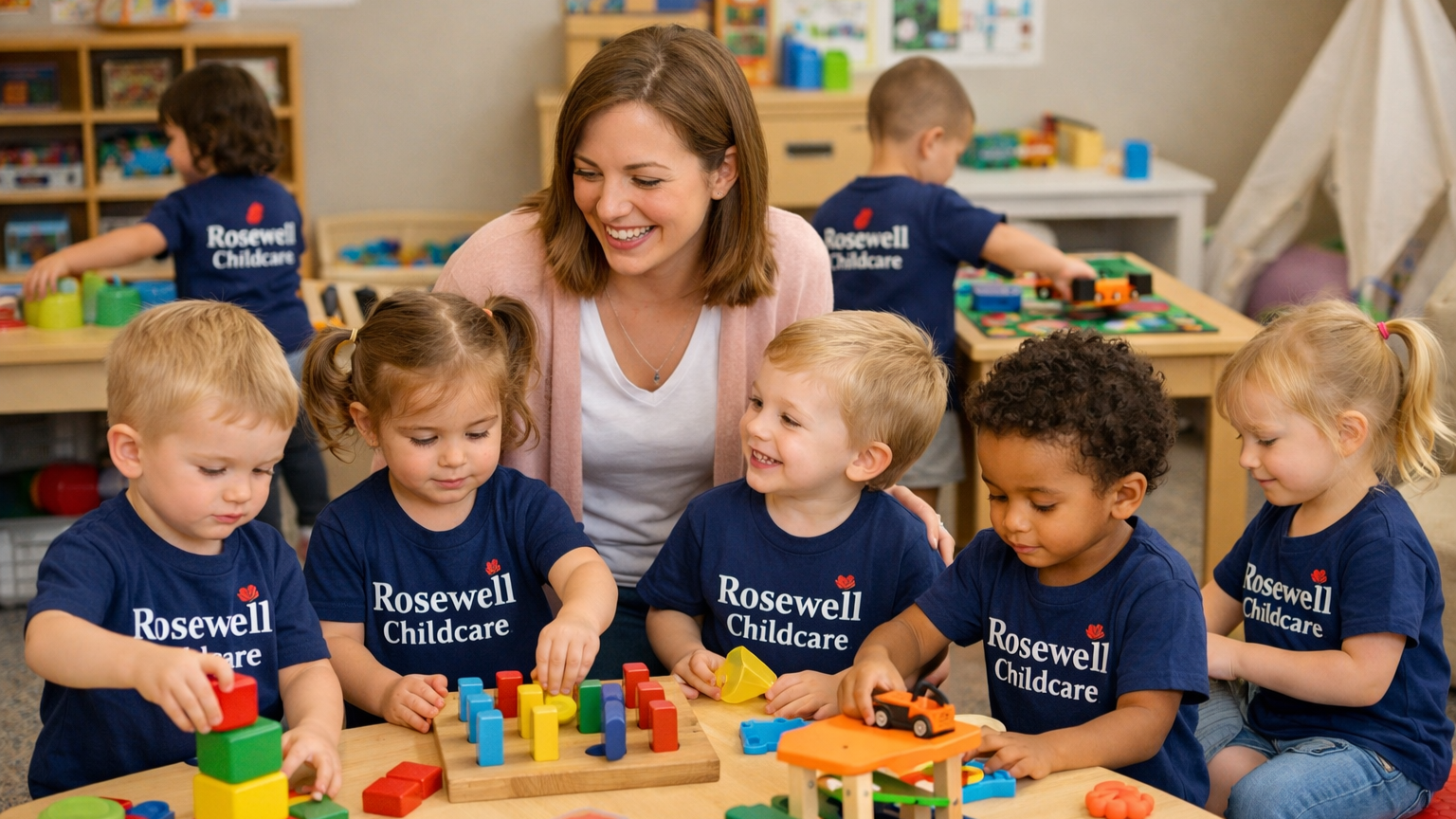
If you are a parent searching for preschool in Roswell, you are probably wondering how toddler indoor activities will shape your child’s early learning experience not just what the classroom looks like.
Many parents tell us their biggest question is this:
“Will my child be happy and learning every day?”
That is exactly why toddler indoor activities matter so much in the early years.These early experiences shape how your child feels about school. They build confidence. They help little minds grow. And they give you peace of mind while you are at work.
At Roswell Childcare Academy, we understand how emotional this decision is for local families. You are not just choosing care. You are choosing the people who will guide your child during some of the most important years of life.
Parents visiting daycares in roswell often share the same concerns.
These are real fears.
One Roswell mom once told us she sat in her car after a tour and cried. She wanted to go back to work, but she felt guilty leaving her 2-year-old.
That feeling is normal.
The right environment should ease those worries. It should feel warm. Organized. Calm. Safe.
And most importantly, it should be filled with meaningful toddler indoor activities that support development in simple, joyful ways.
So what are toddler indoor activities exactly?
This is not just “keeping kids busy.”
The early years are when the brain grows the fastest. Every song, puzzle, story, and art project builds important skills.
These small daily moments prepare them for preschool and eventually Georgia Pre k.
Learning does not start in kindergarten.
It starts now.
Let’s understand this more clearly so you feel confident about what your child is really learning each day.
When parents first hear about classroom activities for young children, they sometimes imagine worksheets or long lessons.
But that is not what early learning looks like.
Indoor learning experiences for toddlers are simple, guided play moments that happen inside a safe classroom environment. These moments are carefully planned by teachers to help children grow socially, emotionally, physically, and mentally.
These experiences are often called toddler indoor activities because they take place inside and are designed for little learners between 1 and 3 years old.
They are not random games.
They are playful learning opportunities with a clear purpose.
When children participate in toddler indoor activities, they are learning without even realizing it.
And that is the beauty of early childhood education.
The first few years of life are powerful.
During this time, your child’s brain is growing very fast. Every sound, word, hug, and activity helps build connections in the brain.
That is why high-quality toddler indoor activities are so important.
A toddler who learns how to sit for story time today will find preschool easier tomorrow.
A toddler who practices sharing toys now will build stronger friendships later.
These early classroom experiences gently prepare children for bigger learning stages ahead, including preschool and programs like Georgia Pre k.
Young children do not grow in just one area at a time.
They grow in many ways together.
Emotional Growth
Toddlers are still learning how to handle big feelings.
Over time, these moments build emotional strength.
These social skills begin during daily toddler indoor activities and become the foundation for teamwork in later school years.
Language grows through repetition and conversation.
Songs, storytelling, and picture books introduce new words every day.
These small conversations help children speak more clearly and confidently.
Fine motor skills are small hand movements that prepare children for writing later.
These actions strengthen tiny hand muscles in a natural way.
When a toddler tries to stack blocks and they fall, something important happens.
Activities like sorting shapes, matching pictures, and simple building tasks improve early thinking skills.
There are many kinds of classroom experiences designed for toddlers. Each type supports a different area of growth.
Let’s look at the main categories.
Music is powerful for young children.
Singing songs helps memory and language.
Clapping and dancing improve coordination.
Examples include:
Music-based toddler indoor activities also help shy children feel included in a group.
Story time is more than just reading.
Teachers:
This builds imagination and attention span.
Some classrooms also use puppets to make stories more exciting.
Art allows toddlers to express themselves freely.
Activities may include:
The goal is not perfect art.
The goal is exploration.
Creative play builds confidence because there is no “wrong” way to create.
Toddlers love to touch and explore.
Sensory bins filled with rice, soft fabric, or water beads allow safe discovery.
These activities support brain development by stimulating different senses.
They also help children stay calm and focused.
Blocks are simple but powerful tools.
When toddlers build towers, they learn:
Construction play is a key part of early classroom learning.
Pretend kitchens, toy phones, and dress-up corners allow toddlers to copy real-life situations.
They may pretend to:
This type of play improves imagination and social understanding.
Simple matching games teach early math skills.
Children might:
These structured tasks build concentration and early logic skills.
Not every moment is loud and active.
Some experiences are calm and focused.
Examples include:
Quiet tasks help toddlers develop attention control.
Quality childcare centers do not choose activities randomly.
They rotate materials regularly to keep children interested.
They also observe each child closely.
If a child struggles with sharing, teachers include more group-based toddler indoor activities to gently build that skill.
If a child loves music, teachers may use songs to encourage language development.
This thoughtful planning makes a big difference.
“Will my child be ready for preschool?”
The answer often depends on early experiences.
These small habits make future classroom transitions smoother.
That confidence carries into preschool and beyond.
Parents can continue simple learning experiences at home.
You do not need expensive tools.
Consistency between home and school strengthens learning.
Even 15 minutes of focused play each evening can support your child’s development.
If you are looking for toddler daycare Roswell GA families trust, you want more than supervision.
You want growth.
Group games and circle time teach:
These skills reduce behavior struggles later.
Story time and singing build vocabulary.
Children learn new words daily through guided toddler indoor activities that encourage talking and asking questions.
Toddlers feel safer when they know what comes next.
Indoor activities follow a gentle daily flow. This builds security and reduces anxiety.
When a teacher praises a child for finishing a puzzle, that smile means everything.
Simple toddler indoor activities give children small wins every day.
Before entering Georgia Pre k, children need to:
These skills develop naturally through thoughtful toddler indoor activities.
Parents searching through daycares in roswell often ask, “What does a normal day look like?”
Here is a simple picture.
These structured toddler indoor activities help toddlers feel part of a group.
Each activity is designed with purpose. These toddler indoor activities build thinking and problem-solving skills.
Balance is important.
A predictable routine helps children feel safe in toddler daycare Roswell GA parents can trust.
When touring daycares in roswell, watch closely.
Ask how they plan toddler indoor activities.
One Roswell dad once toured three centers. In one classroom, children were wandering with no direction. In another, teachers were scrolling on phones.
Then he visited Roswell Childcare Academy.
He saw teachers leading music time and guiding small group toddler indoor activities. Children were laughing but focused.
He said he “just felt it” this was different.
Trust your instincts.
“My child is too young.”
Even toddlers benefit from gentle toddler indoor activities that build social comfort.
“Daycare means less attention.”
Quality toddler daycare Roswell GA centers maintain small groups so teachers can focus on each child.
“Learning starts in kindergarten.”
Children entering Georgia Pre k already need listening and sharing skills. Those begin much earlier.
“Preschool is just play.”
Play is how toddlers learn.
Guided toddler indoor activities turn play into powerful growth moments.
Families often compare several daycares in roswell before choosing.
We carefully design toddler indoor activities that match each stage of development.
Nothing is random.
Everything supports confidence, communication, and preparation for Georgia Pre k.
Our goal is simple:
A first-time mom searching for toddler daycare Roswell GA called us in tears.
Her daughter cried every time she left a babysitter.
During the first week at our center, teachers gently introduced group toddler indoor activities that encouraged participation without pressure.
By week two, her daughter was walking in holding a puzzle piece, excited to join circle time.
Mom told us, “I finally stopped worrying all day.”
That relief matters.
A Roswell father worried his son was “behind” before Georgia Pre k.
He wasn’t speaking clearly yet.
Through daily storytelling and singing toddler indoor activities, teachers encouraged language naturally.
Within months, his son was singing full songs at home.
Toddler indoor activities are simple, guided play experiences that help young children learn while staying inside the classroom. These activities include singing, storytelling, puzzles, building blocks, art, and pretend play.
They are important because toddlers learn best through hands-on play. These activities build language skills, social confidence, focus, and early problem-solving abilities.
Toddler indoor activities help children learn how to sit in small groups, follow simple directions, share with others, and express their feelings.
These small daily skills make the transition into preschool much smoother and less stressful for both parents and children.
Most children can begin a toddler program between 12 to 24 months, depending on their readiness.
If your child is walking, showing curiosity, and starting to communicate basic needs, they may be ready to benefit from structured indoor activities and social interaction.
Play is how toddlers learn.
In a quality preschool program, play is guided with purpose. Activities are designed to teach colors, shapes, early counting, vocabulary, and social skills all in a fun and natural way.
Learning does not look like worksheets at this age. It looks like joyful exploration.
Structured indoor activities help distract and comfort toddlers during drop-off.
When children are immediately engaged in singing, puzzles, or group time, they feel included and secure. Predictable routines also help them understand that mommy or daddy will always come back.
Over time, this builds emotional confidence.
Yes, when supervised by trained teachers.
Quality childcare centers use age-appropriate materials, soft play areas, and constant supervision. Activities are planned to match toddlers’ developmental stage, reducing risks while encouraging exploration.
Safety and learning go hand in hand.
Toddlers thrive with gentle structure.
A balanced day usually includes:
This routine makes children feel secure while still allowing freedom to explore and learn.
Look for:
Trust your instincts. A good preschool should make you feel calm and confident.
Yes, very much.
Daily storytelling, singing songs, naming objects, and simple conversations during activities naturally expand vocabulary. Teachers also model clear speech and encourage toddlers to express themselves.
Many parents notice big improvements in communication after just a few months.
You can continue simple indoor activities at home like:
Learning does not require expensive tools. It just requires time, patience, and connection.
Choosing childcare is a big decision.
If you are visiting daycares in roswell, take your time. Ask questions. Watch how teachers interact.
Notice whether toddler indoor activities are organized and meaningful.
If you would like to see how Roswell Childcare Academy supports local families, we warmly invite you to visit.
Walk through the classrooms.
Meet the teachers.
Picture your child smiling during circle time.
Sometimes, stepping inside is all it takes to feel at peace.
Your child’s journey toward Georgia Pre k begins with small, loving steps.
And those steps start with the right environment.




Comments are closed